
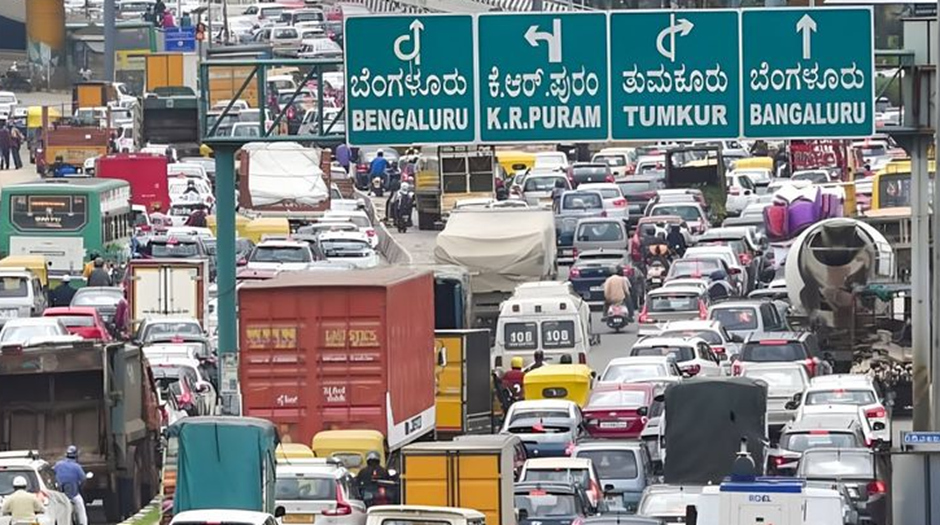
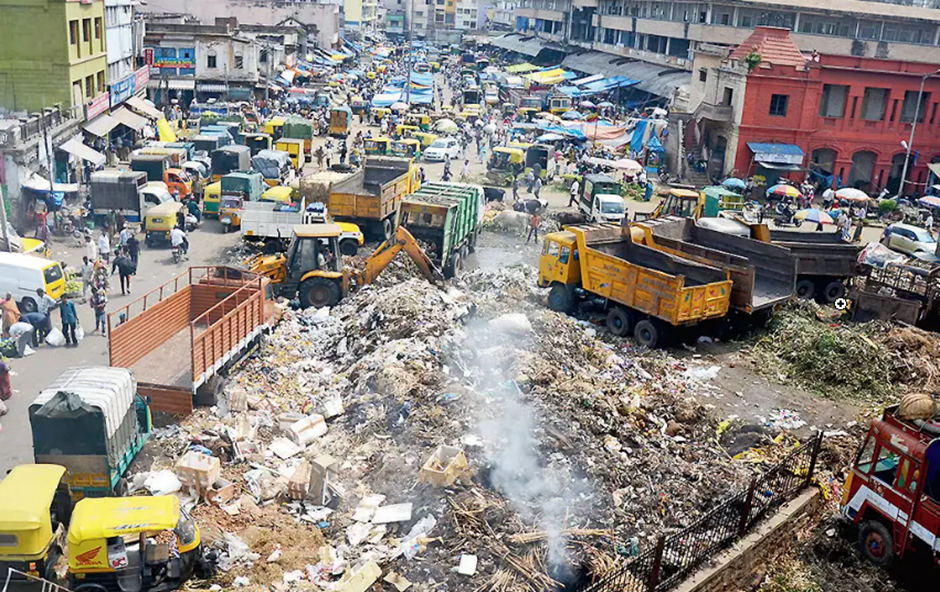
Bengaluru is grappling with severe civic issues – water scarcity, garbage disposal, rainwater logging, flooding, Pothole-ridden roads, incomplete civic works, open nalah gutters, uneven/un-walkable foothpaths, but the worst of them all is the helpless traffic jams.
As populations grows and car ownership rises, Bengaluru faces traffic-jammed roads, longer commute times, and deteriorating air quality.

Bengaluru Before the Y2K Boom (Pre-2000s):
Bengaluru the Garden City once known as…
the “Pensioners’ Paradise” — known for its calm pace, tree-lined streets, and pleasant weather… has today turned into an illegal open air garbage dumping ground on one side… and narrow roads with traffic-jams on the other. The traffic-jams are so bad that moving just 2km could take 2 hrs during peak hours… where you could reach faster by walking than driving… sometimes the peak hours seem to stretch late into the night.
Calling it the Silicon Valley of India is more of a racist-joke by outsiders than anything… there is no comparison to the American one except of the existence of IT companies in the midst of the garbage lined traffic jammed city.
Once upon a time… long long ago… In the year 2000… in the city of Bengaluru Vehicle ownership was modest. Public transport (mainly BMTC buses) was sufficient for most residents.
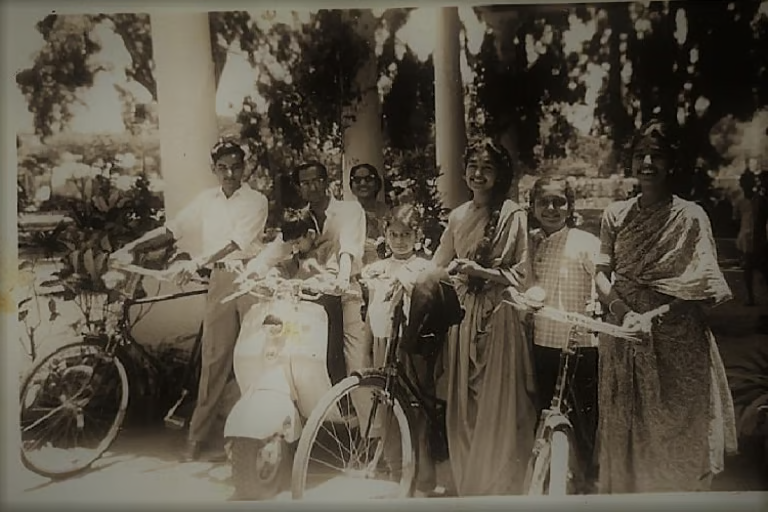
Back then cycling was primarily a means of transport and leisure, especially among students and working professionals.
People rode basic models like Hercules and BSA, often without helmets or gear, navigating quieter roads and less traffic. Renting bicycles from local cycle marts was common, and neighborhoods like Rajajinagar and Jayanagar had active cycling scenes.
Y2K Tech Explosion: The IT boom born out of the Y2K fear lead to the creation of Infosys and the growth of TCS, Wipro and other IT companies in Bengaluru. These brought in fatter pay cheques and massive migration.
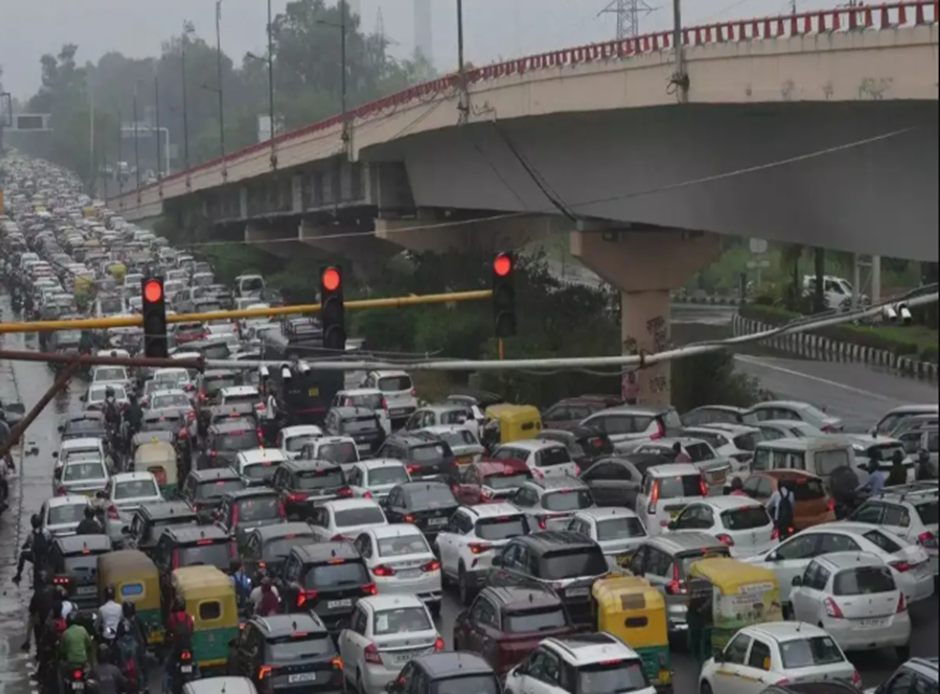
Along with these came uncontrolled expansion of urban areas into surrounding rural/ undeveloped land, leading to increased reliance on private automobiles.
The population of Bengaluru… more than doubled from 55 Lakh in the year 2000 to 124 Lakh in the year 2025.
But the vehicle registration of Bengaluru skyrocketed 24 times… from 5 Lakh cars in Yr 2000 to over 1.2 crore cars in 2025. Such a growth can choke any city… the cancer needs to be stopped before it becomes uncontrollable.
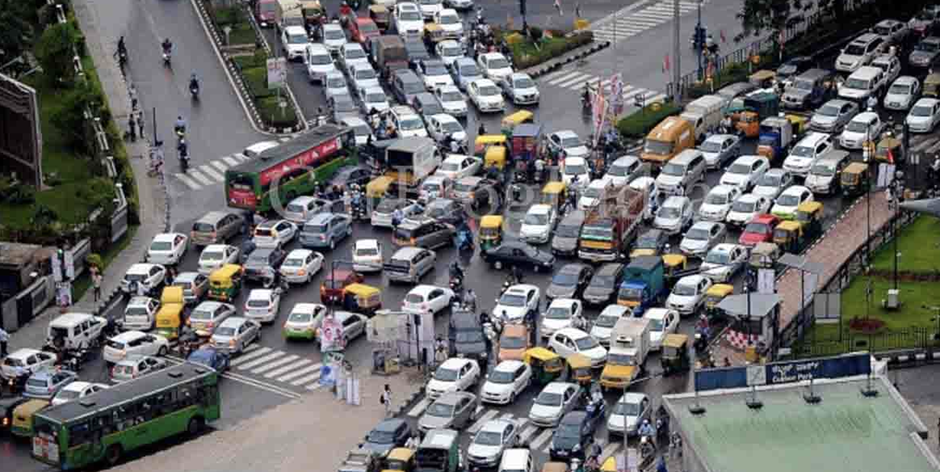
- Metro expansion is slow; BMTC buses remain the backbone but are completely overwhelmed.
- Lack of peripheral truck terminals forces heavy vehicles into city roads.
Innovative but not too practical Fixes suggested are:
- AI-based traffic simulators, green wave signals, and hyperlocal rain predictors are being piloted.
- A ₹1 crore initiative by a startup founder aims to reduce traffic by 25–30% within a year.
These fixes look good on paper and having an “AI” and “hyper-local” solution seems to be more building blocks for the reputation of Bengaluru being the Silicon Valley of India rather than a proper solution that will completely solve the problem.

THE ONLY SOLUTION TO BENGALURU’s TRAFFIC JAM:
Ban the use of Private Cars during peak hours. But before taking this important step 3 big steps need to be taken.
STEP 1: INTROUCTION OF AC BUSES:
People should be encouraged to travel by Public Transport… and to achieve this more Electric Air Conditioned Buses must be added to the service… Electric so that it will be cheaper to operate than Diesel Buses and Air Conditioned to attract the premium customer who travels by car. Electric buses has the least vibration and the maximum comfort which will also attract the premium customers.
STEP2: WELCOME 2-WHEELER TAXIES
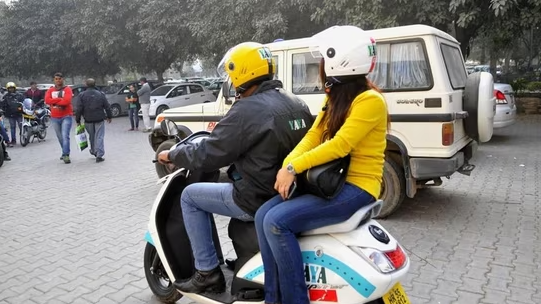
2-Wheeler Taxies can play a VERY big role in decongesting Bengaluru Traffic.
Along with the ban on Private Cars, the Government must WELCOME the use of 2-Wheelers as Taxies so that people will not be stranded on roads without taxies. These 2-wheeler taxies should have a top speed below 80kmph so that speed driving do not happen.
STEP 3: Introduce electric vertical take off Taxies for Fire Brigade, Quick Response teams, Ambulance and Air-Taxies.
(Indigo’s parent company, Interglobe enterprises has some big plans for India. They are planning to launch an all electric air taxi service in India in 2026. In this air taxi, you can go from Connaught place in the heart of Delhi up till Gurugram, in a staggering 7 minutes. These services are expected to cost between 2-3,000 rupees.)
STEP 4: THE FINAL STEP TO THE SOLUTION IS A COMPLETE BAN ON USE OF PRIVATE CARS DURING 7AM-11AM and 5PM-9PM.
One of the easiest solution for Bengaluru …which can be done literally OVERNIGHT… is the complete ban on private cars… in certain areas at all times… or in all areas in the City during peak hours. This is a must on roads where Metro construction going on.
The citizen should be given a choice of paying Rs 1,000 per day (digitally) as a penalty to use his car.
How Banning Private Cars Reduces Traffic Congestion
- Fewer Vehicles, Smoother Flow
Private cars often outnumber public transport vehicles on city roads. By removing them, cities reduce the overall volume of traffic, allowing buses, trams, and emergency vehicles to move more freely. - Encouragement of Public Transport and Active Mobility
When private cars are restricted, people are more likely to use public transport, cycle, or walk. This shift not only reduces traffic but also promotes healthier lifestyles and lowers carbon emissions. - Improved Road Efficiency
Roads previously dominated by private cars can be repurposed for bus lanes, bike paths, and pedestrian zones. This reallocation enhances the efficiency of urban mobility systems. - Reduced Traffic Accidents and Delays
Fewer cars mean fewer accidents, breakdowns, and road rage incidents—all of which contribute to traffic blocks. A streamlined flow of regulated transport reduces unexpected delays.
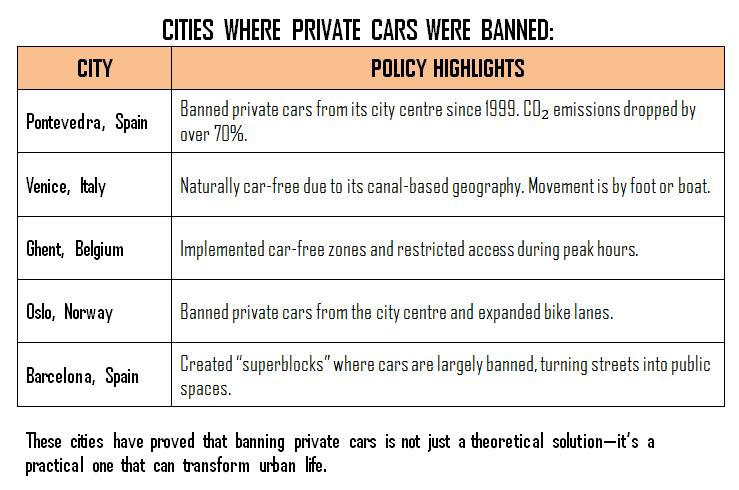
These cities have proved that banning private cars is not just a theoretical solution—it’s a practical one that can transform urban life.
Conclusion: Banning private cars from city roads is a bold but effective measure to combat traffic congestion.
Rs 1,000 as penalty will also increase the Government’s income because there is a lot of rich people who are willing to pay the fine and use the car. Traffic Jam is the perfect EXCUSE for the government to implement such a plan… at least in certain areas where the metro construction is going on… or during peak hours from 7am-11am and 5pm-9pm.
Benefits of banning private cars on roads:
- sustainable transport,
- improves air quality, and
- reclaims public space for people rather than vehicles.
While the transition may face resistance, the long-term benefits—seen in cities like Pontevedra and Oslo—make a compelling case for wider adoption.
As urban challenges intensify, car-free policies may well be the key to unlocking smoother, greener, and more livable cities.
 PlugInCaroo... Karo plugin... abhi!... save the environment!!!
