
These are the Frequently Asked Questions (FAQ) by Ola Shareholders:

1. Is Ola Electric a good company share to buy?
Plus Points of Ola Electric:
· Market Leader: Ola is India’s largest pure-play electric two-wheeler company, with strong brand recognition and aggressive product launches. It has sold nearly 1 million (10 Lakhs eScooters) … in comparison traditional big existing manufacturers ( TVS, Bajaj and HeroMotorCorp) have together sold around 1 million.
· PLI Certification: Its Gen 3 scooters are approved under India’s Production Linked Incentive (PLI) scheme, unlocking 13–18% sales incentives until 2028.
- * Only Li-Ion Battery maker in India: Ola is the only battery Li-Ion Battery manufacturer in India… not only in Autos… but also otherwise there is not any other company making Li-Ion Batteries in India. Li-Ion batteries are very, very important not only in auto sectors but drones, defence equipment, energy storage, power backup anything and everything that consumes electricity more or less requires batteries.
Ola being the single company in Li-Ion Battery in India in spite of years of MoUs by other companies showcases that battery is the most difficult part in an EV to manufacturer… Bigger Companies have feared entering this sector. It also shows that in spite of many companies posturing that they will start making batteries tomorrow… it is not as easy as it seems.
· Tech Innovation: Ola has developed its own 4680-format, 46100, 46120 lithium-ion cells and rare-earth-free motors, reducing costs and supply chain risks.
Also it has continuously innovated and …
provided touch screen features which traditionally established manufacturers have failed to provide.
Ola has moved through 3Generations of genuine innovation… not just changing shape of front apron,sticker/decal/chrome or changing itsheadlight to LED… Ola has achieved great innovation and its Gen4 is right around the corner. Gen4 with have the same battery for multiple vehicles… for Scooters, Motorcycles, eRickshaws, electric small car, etc.
Ola is perhaps the most vertically integrated automobile company in India.
· Improving Margins: Due to being a highly vertically integrated company Ola has continuously abled to increase its efficiencies much faster than expected. The Auto business turned EBITDA-positive in June 2025, and gross margins are expected to hit 35–40% by FY26-end.
· Strong Retail Interest: Over 16.5 lakh retail investors hold the stock, showing broad public engagement. As its bottom line improves… more and more Foreign Investors (FIIs) and Domestic Investors (DIIs) would get attracted to the stock.
Minus Points of Ola Electric:
· Stock Volatility: Ola’s share price has crashed over 68% from its 52-week high, making it the worst-performing midcap stock in 2025.
· Investor Exits: Major investors like SoftBank, Hyundai, Kia, and Tiger Global have trimmed stakes.
· Financial Losses: Q1 FY26 revenue fell 50% YoY to ₹828 crore, with net losses widening to ₹428 crore. But this is expected with a new company… especially if it is in the vehicle manufacturing sector.. where most of the existing companies prefer to assemble Completely Knocked Down Kits (CKD) from China… than fully manufacturing in India .
But those companies manufacturing in India would achieve a very low cost of production after a certain volume.
· Customer Service Concerns: Some analysts cite poor after-sales service as a drag on brand loyalty
2. When will Ola Electric become profitable?
Ola expects profitability improvements starting Q2 FY26, largely due to incentives from the Production Linked Incentive (PLI) scheme.
3. How is Ola Electric positioned in the Indian EV market?
Ola is India’s largest pure-play EV company and recently (Aug 2025) overtook Bajaj Auto to reclaim the No. 2 spot in electric two-wheeler sales.
4. What are the future product line up of Ola?
Ola is already manufacturing:
- 4680 Cells (22 Sept 2025),
- Rare Earth Free Motors,
- Gen3 eScooters
- Gen3 eRoadsterX motorcycle.
Ola’s Future Products:
- Lithium-Ion Battery:
- 46100 Cell (bigger and better than 4680),
- 46120 Cell (bigger and better than 46120),
- MotorCycle: RoadsterX (22 Sept 2025)
- eScooters:
- ProSports (Jan 2026)
- GigScooter (22 Sept 2025)
- Z-Series Scooter,
- Home Power Backup… Power Pod (Power replacement at home)
- eRickshaw (Dec 2025-Jan 2026)
- eSmall Pickup
- eSmall Car
5. Is Ola Future Factory and Giga Factory the same?
Future Factory is where the vehicles are made…Giga Factory is where the Lithium-Ion Bharat Cell are made.
Future Factory: Makes Vehicles
Location: Tamil Nadu, Built on 500 acres, with plans to scale up to 10 million vehicle units per year
Giga Factory: Makes Bharat Cells… India’s own Lithium-Ion battery
Giga Factory Location: Also in Tamil Nadu, but on a separate 115-acre site
What is the status of Gigafactory?
- Already manufacturing 1 GWh of 4680-format lithium-ion cells.
- Reduced its target to 5 GWh by FY29 due to slower EV market growth.
- Final Plan is for 100 GWh by 2030, depending upon the demand
6. How is Ola managing supply chain risks, especially rare earth shortages?
- Ola has developed its own Ferrite Assisted Synchronous Reluctance Motor, which uses ferrite magnets—a much more abundant and eco-friendly alternative.
- Ola Electric has developed magnet-less motors for its latest Gen 3 platform. Instead of traditional permanent magnets, these motors use magnetized electrical coils, which improve torque and efficiency while eliminating reliance on rare earth materials.
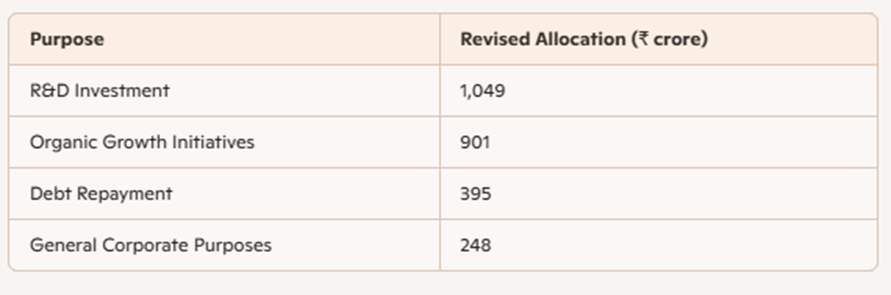
7. Why was the IPO proceeds REALLOCATED? How is it being used?
At its AGM, Ola received shareholder approval to reallocate IPO funds and extend deployment timelines. 99.09% of shareholders voted in favour of the reallocation and timeline extension.
Ola originally planned to scale its Gigafactory to 20 GWh by mid-2026, but revised that down to 5 GWh by FY29 due to slower-than-expected EV demand.
8. What does SoftBank’s stake reduction mean for Ola Electric?
SoftBank cut its stake from 17.83% to 15.68%, triggering questions about long-term confidence and governance.
SoftBank sold 2.15% of its share. As these 9.5 Crore shares were sold in the open market the market naturally fell by 12% over 2 sessions.
SoftBank’s dilution may cause short-term jitters, but Ola Electric’s fundamentals—wide product portfolio, tech innovation, government incentives, and market leadership—remain intact.
9. Why did Hyundai, Kia exit Ola Electric by selling their entire stake?
· Hyundai sold its entire 2.47% stake, amounting to 10.88 crore shares, for approximately ₹552 crore.
· Kia offloaded its full 0.62% stake, selling 2.71 crore shares for around ₹137 crore
Hyundai and Kia are Car companies and probably they expected Ola Electric to enter into Electric Car production much faster… but since Ola Electric had to fight bad press, rumours, regulatory authorities.. basically overcome existential issues… it had to cancel its plans to launch electric car probably Hyundai and Kia were disinterested.
As of now what we know is that Ola has cancelled its original car plans… and might be opting for a small car (MG Comet) type of car… that too not any time soon… probably after 2028.
This is because Ola has a long list of 2 wheelers to launch other than electric rickshaws and electric 3-wheel pickups
10. Why has the Ola Stock been volatile?
Ola’s shares have seen sharp swings—from a high of ₹123.9 to a low of ₹39.6. Why?
When a stock slips into the penny stock category (trading below ₹100)… it enters a zone of heightened volatility for several interconnected reasons:
a) Speculative Trading
- These stocks attract day traders and speculators chasing quick gains.
- Momentum-driven buying and selling can amplify volatility, especially when fueled by hype or rumors.
b) Manipulation Risk
- Low prices make penny stocks vulnerable to pump-and-dump schemes.
- Fraudsters can artificially inflate prices, then dump shares, leaving retail investors with losses.
- People think ALL Penny Stock Companies are flopped companies or facing distress so avoid thinking/holding long term.
- Any news—positive or negative—can have an outsized effect on valuation
- These stocks are often more reactive to sentiment than fundamentals.
c) Lack of EV-market awareness of stock analysts:
Most Stock Market Analysts have good knowledge about stocks in general. But like any other car and 2-wheeler owners, they have little technical knowledge or deep knowledge about like Cars or 2Wheeler.
Their knowledge about NICHE products like Electric 2-Wheeler is even less. They consider Petrol vehicles and Electric Vehicles as the same THING … and compare them with the same scale… without realising that they are comparing Apples with Oranges.
They feel if a Petrol company is making Petrol Scooters, selling them and servicing them… similarly they will be able to successfully make Electric Scooters, sell them and service them.
They fail to realise that EVs do not need that much servicing. The periods of servicing and the parts replacement will be far less than Petrol Scooters. This will DIRECT affect the dealerships and indirectly affect the manufacturing company.
Petrol vehicles have its own parts replacement and service ecosystem which literally crumbles under Electric Vehicles. This will directly affect the dealers first and affect the profits of the company later.
Bearing the weight of falling domestic Petrol 2Wheeler sales:
Other factor to consider is: When Ola and Ather is selling eScooters it does not have to worry about the falling sale of petrol scooter domestically. But this is something that is becoming a bigger and bigger problem for companies like Bajaj, TVS and Hero MotorCorp… every single month.
Ola and Ather do not have to deal with the problems E20 fuel is doing to the tanks of Petrol Scooter.
Plus when Petrol 2Wheeler companies were trying to avoid the onslaught of EVs by trying to create 2Wheelers with bigger CC engines… they get hit with a 40% Sin Tax.
These are problems that Pure EV companies like Ola and Ather do not have to deal with.
These things affect the profit of Petrol 2Wheeler companies but do not affect the profits of electric 2 wheeler companies. As time goes many such things will “snowball” and become bigger and bigger problems weighing down Petrol 2Wheeler companies. This is something companies like Ola and Ather are not affected with.
All the Electric 2Wheeler companies focus on is to increase sales… which they are able to do at the cost of the Petrol 2Wheeler industry.
 PlugInCaroo... Karo plugin... abhi!... save the environment!!!