
From Empire to Eclipse: How Famine Can Undermine Superpower Status
Throughout history, the rise and fall of superpowers have often hinged not just on military might or political influence, but on the stability of their economies and the ability to feed their people.
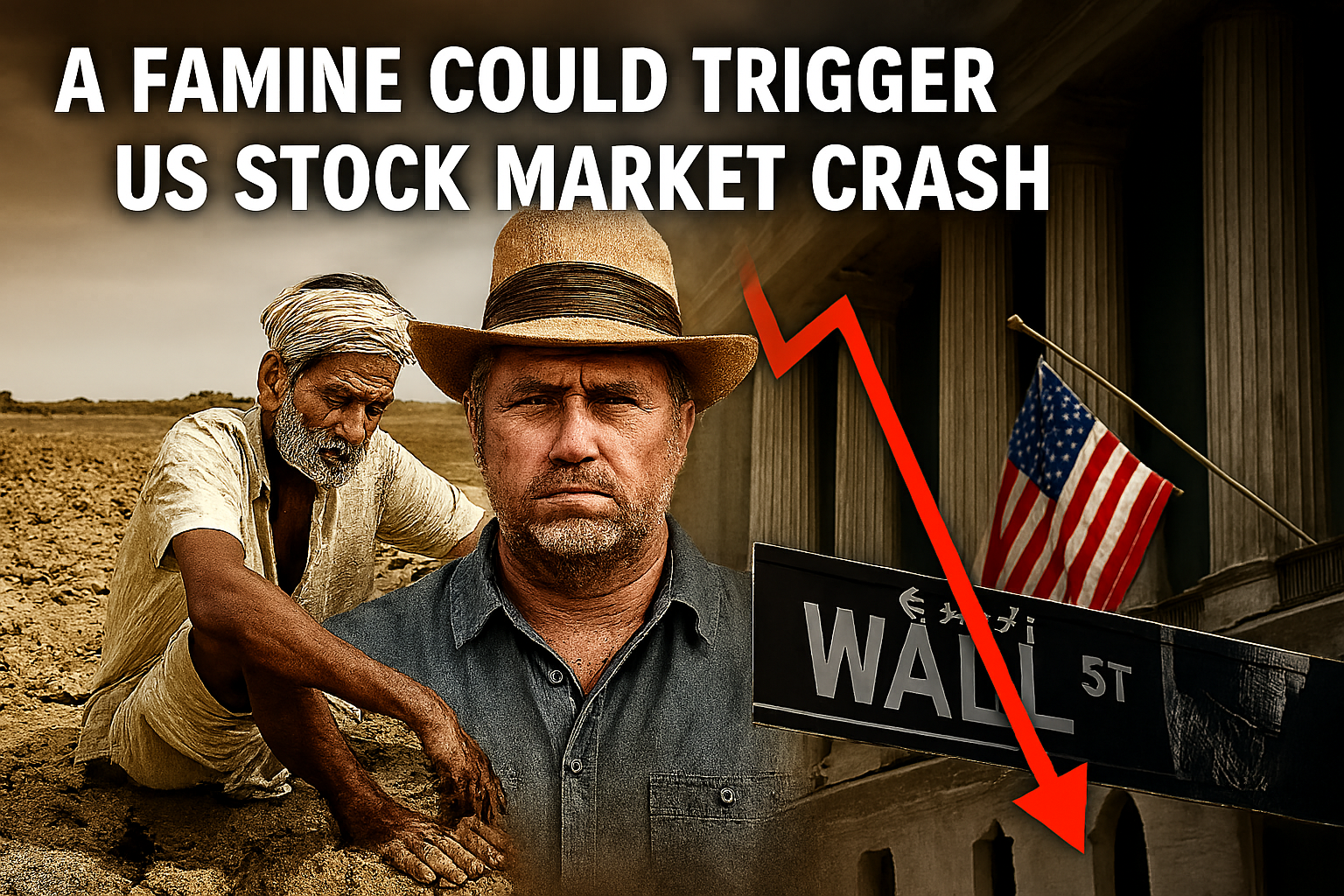
Famine—whether literal or systemic—has repeatedly exposed the fragility of empires.
From France’s decline in the early 19th century to Britain’s post-colonial unraveling, food insecurity has been a silent but potent force in reshaping global power. Today, even the United States…
is not immune to this historical pattern.
France: From Revolutionary Fire to Imperial Fade
France’s superpower status began to erode after the Napoleonic Wars, culminating in its defeat at the Battle of Waterloo in 1815. But the seeds of decline were sown earlier. The French Revolution (1789–1799) was ignited in part by famine-like conditions—poor harvests, soaring bread prices, and widespread hunger. The inability of the monarchy to address food insecurity fueled public outrage and led to the collapse of the ancien régime. Though France remained influential, it never regained its dominant global position.
Britain: The Empire That Starved Its Jewel
Britain’s global dominance peaked in the 19th century, bolstered by industrialization and colonial wealth. Yet its grip began to loosen in the 20th century, especially as its largest colony—India—suffered repeated famines. The Bengal Famine of 1943, which killed an estimated 2–3 million people, exposed the moral and logistical failures of British rule. Wartime policies, grain exports, and administrative neglect turned a natural disaster into a humanitarian catastrophe. These events eroded Britain’s legitimacy and accelerated the push for Indian independence. By the time of the Suez Crisis in 1956, Britain’s inability to act without U.S. support marked the end of its superpower status.
United States: A Future at Risk?
Today, the United States stands as the world’s leading superpower. But history warns that even the mightiest can fall. If the U.S. were to experience famine or famine-like conditions—triggered by climate change, supply chain collapse, or economic mismanagement—the consequences could be profound. A weakened economy would undermine the dollar’s global dominance, opening the door for alternatives like the proposed BRICS currency. If China, backed by BRICS nations, capitalizes on such a moment, it could displace the U.S. as the world’s economic leader.
The Triple Threat: Famine, Dollar Decline, BRICS Rise
- Famine would destabilize domestic markets and erode public trust.
- Dollar decline would reduce U.S. influence in global trade and finance.
- BRICS currency could offer an alternative reserve currency, shifting power eastward.
Together, these forces could transform the U.S. from a rich nation into an impoverished one—echoing the trajectories of France and Britain before it.
If the United States were to face famine or famine-like conditions, the stock market would likely plunge due to investor panic, inflationary pressure, and supply chain breakdowns. Food shortages would spike commodity prices and erode consumer spending, while a weakened dollar could trigger capital flight and reduce foreign investment. In such a scenario, the emergence of a BRICS-backed currency could accelerate de-dollarization, undermining U.S. financial dominance and shifting global investor confidence toward emerging markets—potentially transforming America from a financial powerhouse into an economically vulnerable nation.
Immediate Effects on the U.S. Stock Market
- Investor panic and sell-offs: Food shortages would trigger fear and uncertainty, leading to rapid declines in stock prices, especially in consumer goods, retail, and agriculture sectors.
- Commodity price spikes: Prices of agricultural commodities like wheat, corn, and soybeans would surge, affecting food producers and consumers alike.
- Supply chain disruptions: Transportation, logistics, and manufacturing stocks would suffer as food distribution networks collapse.
- Inflation surge: Scarcity of food would drive up prices, leading to inflation and reduced consumer spending—bad news for retail and service sectors.
History doesn’t repeat itself, but it often rhymes. The lesson is clear: superpower status is not guaranteed. It must be nourished—literally and figuratively.
 PlugInCaroo... Karo plugin... abhi!... save the environment!!!