
When considering a backup power solution, two technologies dominate the conversation: Lead-Acid batteries and Lithium-Ion batteries. Both can deliver 5 kWh of stored energy, but they differ in space requirements, performance, longevity, and cost. (हिंदी के लिए नीचे स्क्रॉल करें)

Lets go through the 6 main points of comparison between them:
1. Space required: A Lead-Acid system is the traditional choice, known for its affordability and widespread availability. However, it is bulky and requires significant space, often demanding a dedicated corner or even a small room with proper ventilation.
In contrast…
a Lithium-Ion system is compact and lightweight, easily wall-mounted or tucked into a cabinet, making it far more space-efficient.
2. Depth of Discharge: When it comes to usable energy, Lead-Acid batteries fall short. Their depth of discharge is limited to about 50%, meaning that from a 5 kWh system, only around half is practically usable.
Lithium-Ion batteries, on the other hand, allow deeper discharge—up to 80–90%—making more of the rated capacity available for real-world use. This efficiency translates into longer operation times for the same nominal capacity.
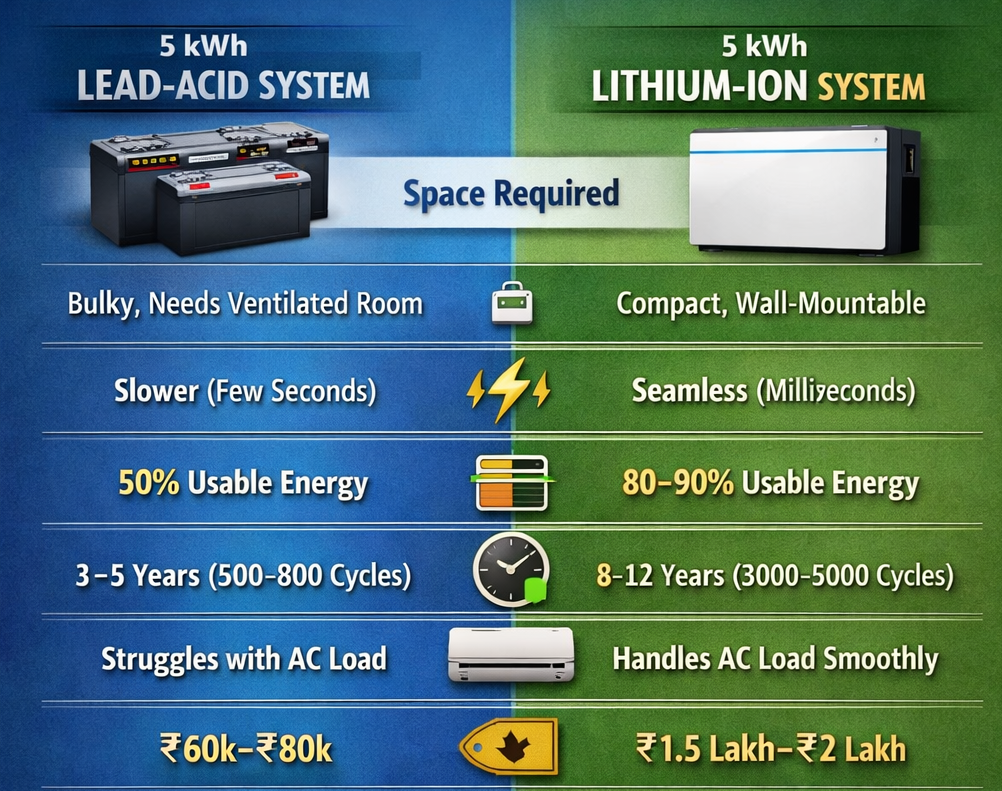
3. Battery life: is another area where the difference is stark. Lead-Acid batteries typically last 3–5 years, offering 500–800 charge cycles, and often require maintenance such as topping up distilled water.
Lithium-Ion batteries, by contrast, can last 8–12 years with 3000–5000 cycles, and they are virtually maintenance-free. Over time, this longevity makes Lithium-Ion systems more cost-effective despite their higher upfront price.
4. Can it carry Air conditioner load?: For heavy loads such as air conditioners, both systems can technically deliver power, but Lead-Acid batteries often struggle with voltage drops under sustained demand, which reduces efficiency and accelerates wear.
Lithium-Ion systems handle such loads more smoothly, maintaining stable voltage and efficiency even under stress.
5. Price: A 5 kWh Lead-Acid system may cost between ₹60,000 and ₹80,000, while a Lithium-Ion system of the same capacity ranges from ₹1,50,000 to ₹2,00,000.
The initial investment in Lithium-Ion is significantly higher, but its longer lifespan and lower maintenance often offset this difference over time.
6. Switchover speed: Lead-Acid systems typically take a few seconds to switch over, which can cause lights to flicker and sensitive electronics to reset. For households, this may be tolerable, but for critical applications—servers, medical devices, or uninterrupted comfort—such delays can be costly.
Lithium-Ion systems excel here, offering near-instantaneous switchover measured in milliseconds, ensuring seamless continuity.
Conclusion:
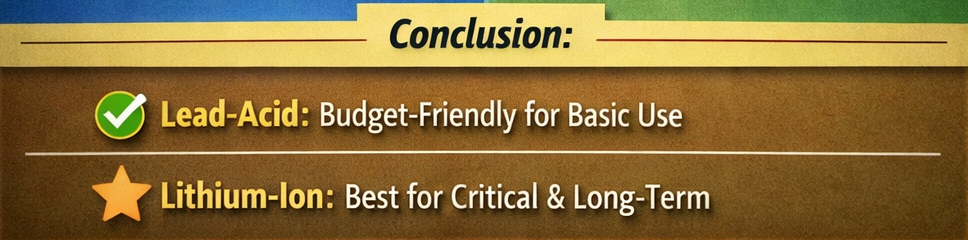
Choosing between them boils down to just one thing… SWITCHOVER SPEED – whether you need seamless switchover for critical equipment or are comfortable with a slower transition for household use.
- Lead-Acid is the budget-friendly solution for non-critical household use.
- Lithium-Ion is for critical equipment and long-term performance.
**************************************************************************
सबसे अच्छी इन्वर्टर बैटरी – लेड-एसिड या Li-Ion?
1. ज़रूरी जगह: Lead-Acid सिस्टम एक पारंपरिक विकल्प है, जो अपनी किफ़ायती कीमत और आसानी से उपलब्ध होने के लिए जाना जाता है। हालाँकि, यह भारी-भरकम होता है और इसके लिए काफ़ी जगह की ज़रूरत होती है; अक्सर इसके लिए एक अलग कोने या यहाँ तक कि ठीक से हवादार एक छोटे कमरे की भी ज़रूरत पड़ सकती है।
इसके विपरीत, Lithium-Ion सिस्टम कॉम्पैक्ट और हल्का होता है; इसे आसानी से दीवार पर लगाया जा सकता है या किसी कैबिनेट में रखा जा सकता है, जिससे यह जगह के मामले में कहीं ज़्यादा बेहतर साबित होता है।
2. डिस्चार्ज की गहराई (Depth of Discharge): जब इस्तेमाल करने लायक ऊर्जा की बात आती है, तो Lead-Acid बैटरियाँ पीछे रह जाती हैं। इनके डिस्चार्ज की गहराई लगभग 50% तक ही सीमित होती है; इसका मतलब है कि 5 kWh के सिस्टम से, असल में सिर्फ़ लगभग आधा हिस्सा ही इस्तेमाल किया जा सकता है।
दूसरी ओर, Lithium-Ion बैटरियाँ ज़्यादा गहराई तक डिस्चार्ज होने की सुविधा देती हैं—80–90% तक—जिससे इनकी कुल क्षमता का ज़्यादा हिस्सा असल ज़िंदगी में इस्तेमाल के लिए उपलब्ध हो पाता है। इस दक्षता का नतीजा यह होता है कि उतनी ही क्षमता होने पर भी ये ज़्यादा लंबे समय तक काम करती हैं।
3. बैटरी की उम्र: यह एक और ऐसा पहलू है जहाँ दोनों के बीच काफ़ी बड़ा फ़र्क नज़र आता है। Lead-Acid बैटरियाँ आम तौर पर 3–5 साल तक चलती हैं और 500–800 चार्ज साइकिल देती हैं; साथ ही, अक्सर इनमें रखरखाव की ज़रूरत पड़ती है, जैसे कि डिस्टिल्ड वॉटर (आसुत जल) डालना।
इसके विपरीत, Lithium-Ion बैटरियाँ 8–12 साल तक चल सकती हैं और 3000–5000 साइकिल दे सकती हैं; साथ ही, इनमें लगभग किसी भी तरह के रखरखाव की ज़रूरत नहीं पड़ती। समय के साथ, अपनी ज़्यादा शुरुआती कीमत के बावजूद, अपनी लंबी उम्र की वजह से Lithium-Ion सिस्टम ज़्यादा किफ़ायती साबित होते हैं।
4. क्या यह एयर कंडीशनर का लोड उठा सकता है?: एयर कंडीशनर जैसे भारी उपकरणों के लोड के लिए, तकनीकी तौर पर दोनों ही सिस्टम बिजली दे सकते हैं; लेकिन लगातार ज़्यादा बिजली की माँग होने पर Lead-Acid बैटरियों में अक्सर वोल्टेज में गिरावट की समस्या आती है, जिससे इनकी दक्षता कम हो जाती है और ये जल्दी खराब होने लगती हैं।
इसके विपरीत, Lithium-Ion सिस्टम ऐसे भारी लोड को ज़्यादा आसानी से संभाल लेते हैं; ज़्यादा दबाव पड़ने पर भी ये स्थिर वोल्टेज और दक्षता बनाए रखते हैं।
5. कीमत: 5 kWh के Lead-Acid सिस्टम की कीमत ₹60,000 से ₹80,000 के बीच हो सकती है, जबकि उतनी ही क्षमता वाले Lithium-Ion सिस्टम की कीमत ₹1,50,000 से ₹2,00,000 के बीच होती है।
Lithium-Ion सिस्टम में शुरुआती निवेश काफ़ी ज़्यादा होता है, लेकिन इसकी लंबी उम्र और कम रखरखाव की ज़रूरत होने की वजह से, समय के साथ यह फ़र्क अपने आप ही पूरा हो जाता है। 6. स्विचओवर की गति: लीड-एसिड सिस्टम को आमतौर पर स्विचओवर करने में कुछ सेकंड लगते हैं, जिससे लाइटें टिमटिमा सकती हैं और संवेदनशील इलेक्ट्रॉनिक उपकरण रीसेट हो सकते हैं। घरों के लिए, यह शायद ठीक हो, लेकिन ज़रूरी कामों के लिए—जैसे सर्वर, मेडिकल उपकरण, या बिना किसी रुकावट के आराम—इस तरह की देरी महंगी पड़ सकती है।
लिथियम-आयन सिस्टम इस मामले में सबसे आगे हैं; ये लगभग तुरंत स्विचओवर करते हैं, जिसे मिलीसेकंड में मापा जाता है, जिससे बिना किसी रुकावट के काम चलता रहता है।
निष्कर्ष:
इन दोनों में से किसी एक को चुनने का फ़ैसला सिर्फ़ एक ही बात पर निर्भर करता है… स्विचओवर की गति – यानी, क्या आपको ज़रूरी उपकरणों के लिए बिना किसी रुकावट के स्विचओवर चाहिए, या आप घर के इस्तेमाल के लिए थोड़ी धीमी गति से होने वाले बदलाव से भी संतुष्ट हैं।
• लीड-एसिड उन घरेलू कामों के लिए एक किफ़ायती उपाय है जो बहुत ज़्यादा ज़रूरी नहीं हैं।
• लिथियम-आयन उन ज़रूरी उपकरणों और लंबे समय तक चलने वाले बेहतर प्रदर्शन के लिए है।
 PlugInCaroo... Karo plugin... abhi!... save the environment!!!