
Why is ContainerBESS expected to “hit it out of the park”? The answer lies in India’s massive energy storage gap.
- Grid Stabilization: As India scales its solar capacity toward 280 GW by 2030, the grid needs massive batteries to store power during the day and release it at night.
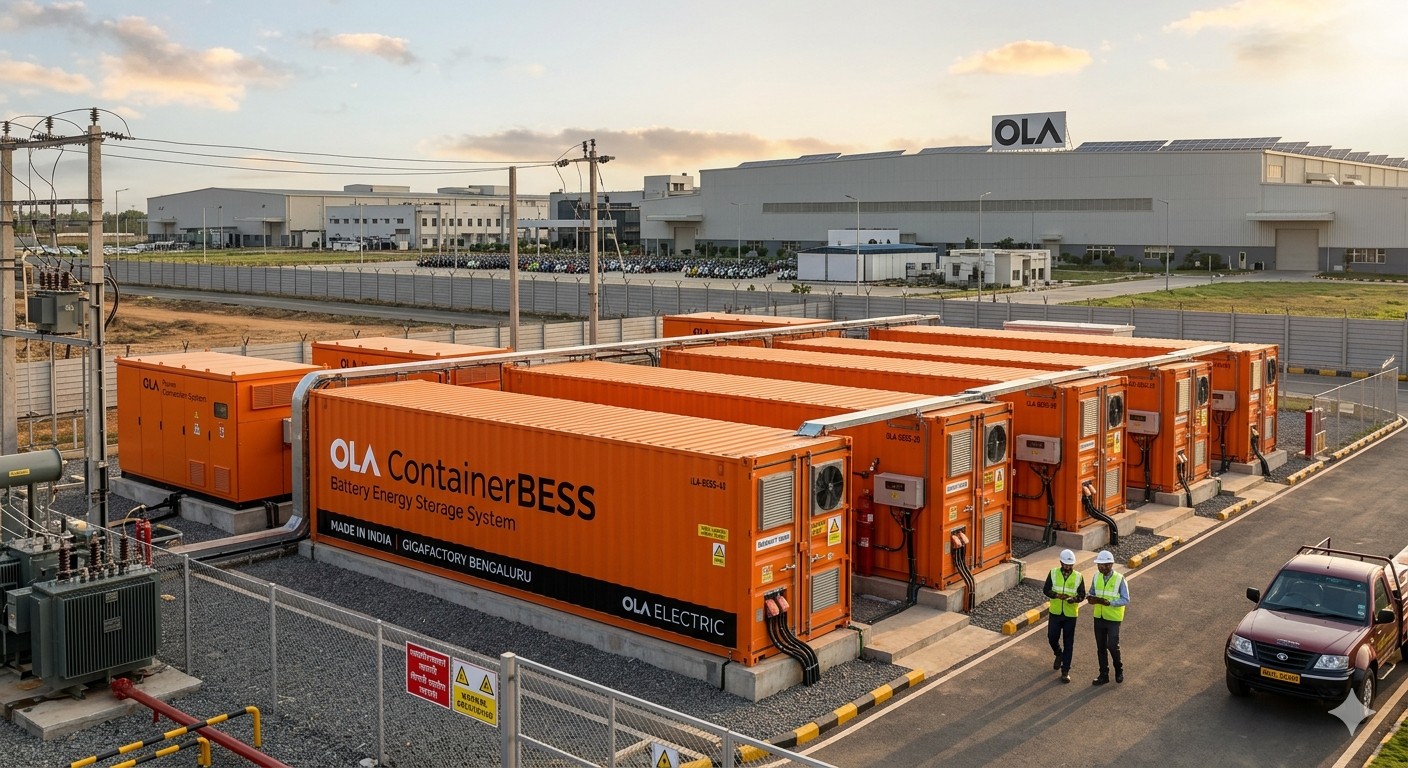
- Replacement of Diesel Gensets: Industrial and commercial sectors are desperate for clean, silent alternatives to diesel generators.
- Cost Advantage: Because Ola is manufacturing the cells in-house at its Tamil Nadu Gigafactory, it avoids the heavy import duties that cripple competitors. This vertical integration could allow Ola to undercut traditional power players like Exide or Amara Raja.
ContainerBESS the Cash-Cow
The most compelling part of the ContainerBESS strategy is its financial role. Unlike the electric two-wheeler market, which is plagued by high service costs and intense competition, the BESS market offers:
- Higher Margins: Stationary storage doesn’t require the complex mechanical components (motors, suspensions, chassis) of a scooter. It is essentially “cells in a box,” leading to projected gross margins of 40–50%.
- Predictable Revenue: Large-scale BESS contracts with power DISCOMs or solar farms provide steady, long-term cash flow.
- Funding the Ecosystem: This “cash-cow” revenue can be diverted to fund R&D for more capital-intensive projects, such as Ola Humanoids, electric cars, or solid-state battery research.
Thus ContainerBESS will be able to provide Ola Electric with regular cashflow. Although major investment has been completed… Ola will need regular big investments for its future products. This will come from ContainerBESS business.
Although Container BESS was announced to be launched by June 2026… we can expect it to be delayed by 6 months. So it should make landfall by Dec 2026.
Ather investors very patiently waited for 13 long years… and still it is not profitable, but its shares have shot up nicely.
Ola could be profitable in 1-2 yrs… can OLA shareholders have that kind of patience?
 PlugInCaroo... Karo plugin... abhi!... save the environment!!!