Ola Electric’s roadmap for 2026 is crystal clear: premium electric motorcycles, ShaktiUPS, and Container BESS are the headline acts.
The company seems determined to position itself as a high-tech, premium EV player rather than a mass-market disruptor.
Ola Electric Motorcycles due in 2026
But in the process, we at PlugInCaroo are guessing that Ola appears to have quietly sidelined its Gig scooter, Z-Series scooter, and even the much-discussed electric autorickshaw… the smallCar? well that could be 3-5yrs down the line.
Ola Electric’s journey from rigorous battery testing to the brink of launching its ambitious Lithium-Ion Gigafactory marks a seismic shift in India’s clean-tech landscape. What began as a bold bet on electrification is now shaping up to be a defining moment in the company’s evolution—from a disruptor to a dominant force.
Every year on 15 August, Ola Electric hosts its flagship event called Sankalp at its manufacturing facility in Tamil Nadu.
This annual gathering is strategically timed to coincide with India’s Independence Day, symbolizing the company’s commitment to national innovation and self-reliance in the electric mobility sector.
At first glance, Ola Electric’s recent challenges—delays in product launches, financial losses, and growing market skepticism—might seem like signs of a struggling company. However, a deeper analysis reveals that the reality is entirely different.
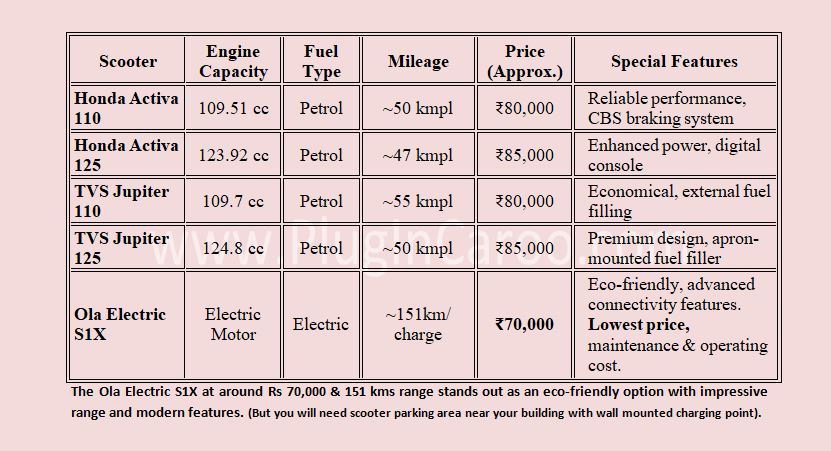
Scooters have become a popular choice for commuting in India due to their affordability, ease of use, and versatility. Among the market leaders, Honda Activa and TVS Jupiter have firmly established themselves as reliable petrol-driven options, while Ola Electric S1X signifies the emerging dominance of electric scooters.
Lets compare the features, advantages, and areas of consideration for these scooters.
The Honda Activa offers two models: the Activa 110 and Activa 125. The Activa 110 provides a balance between affordability and mileage, delivering around 50 km per litre and priced around ₹80,000.
On the other hand, the Activa 125, priced around ₹85,000, caters to those seeking enhanced power and additional features like a digital console.
Both models uphold Honda’s reputation for reliability, making them appealing to riders in urban areas.
Similarly, the TVS Jupiter features two variants: the Jupiter 110 and Jupiter 125.
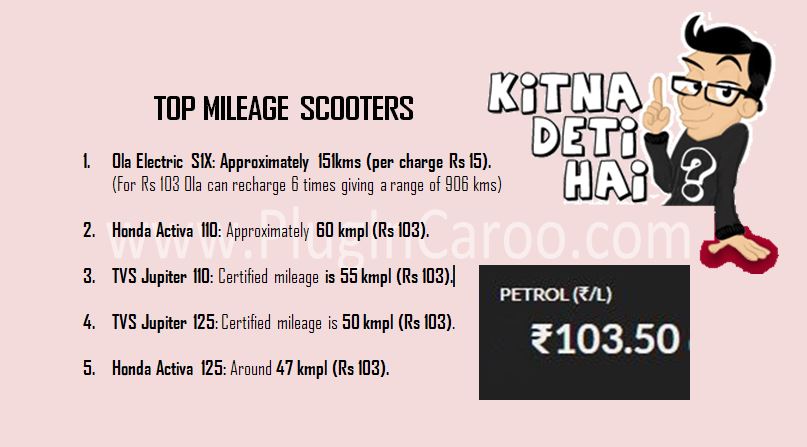
MILEAGE: Kitna deti hai?
As far as mileage is concerned Ola Electric S 1 X leads the pack with 906kms per Rs 103 (cost of 1ltr Petrol) or 151 kilometres from a single charge which costs around Rs 15.
For every litre of petrol price, or hundred and three rupees, an Ola owner can charge his scooter at least 6 times.
This gives him a range of around 906 kilometers.
This means that for Rs 103 the Ola owner can ride for 906 kilometers. This is huge savings.
Honda Activa 110 gives around 60 kilometers per liter, followed by Jupiter 110.
But Jupiter’s 125 gives slightly better mileage of 50 kilometers than Activa 125 which gives around 47 kilometers of range per liter.
In conclusion: the choice between these scooters depends on individual priorities—be it mileage, advanced features, eco-friendliness, or cost-effectiveness.
For traditional petrol scooter enthusiasts, the Activa and Jupiter offer dependable options across varying budgets. But the increasing petrol costs adds considerable burden on the customer’s pocket.
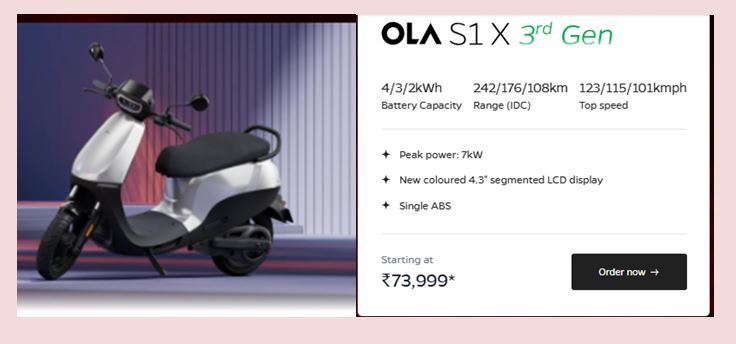
Ola Electric S1X has the lowest maintenance and operation costs. But unless you have a fixed parking spot near your building with charging point Electric Scooters are not for you.
It is ultimately, one’s commuting needs that shape the decision, ensuring that whether petrol-powered or electric, the ideal scooter should cater to the rider’s lifestyle.
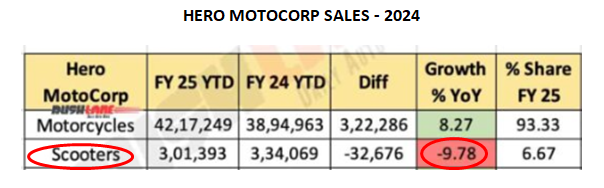
The Indian two-wheeler market has witnessed a significant shift in recent years, with petrol scooters experiencing a notable decline in sales especially in November-December 2024.
This trend is indicative of a broader movement towards sustainable and eco-friendly transportation solutions; signalling the end of the petrol (ICE) age in India.


 PlugInCaroo... Karo plugin... abhi!... save the environment!!!