On August 15, 2026, Ola Electric unveiled its ambitious Shakti energy storage portfolio, marking a decisive step beyond electric mobility into the broader energy ecosystem. The launch coincided with India’s Independence Day, symbolically aligning the initiative with the nation’s aspiration for energy independence.
Ola Electric’s retail journey has been marked by uneven expansion and limited penetration into high-demand states.
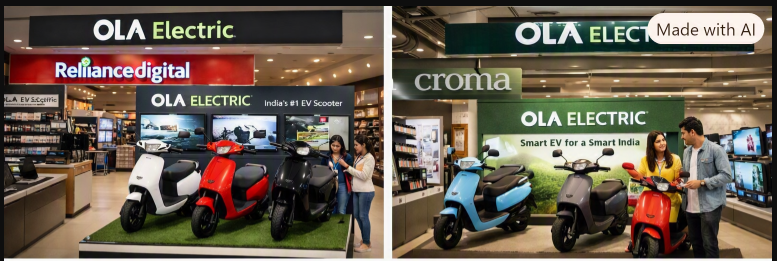
While its decision to invite dealership partners is a step toward decentralizing sales… a more visionary approach would be to partner with electronics showrooms such as Reliance Digital, Croma, and Vijay Sales than Automobile Dealerships.
Ola Electric’s retail presence is now just 45 stores (list is given below as per their website) across 8 Indian cities — highlights its limitations.
While the company once grew beyond 3,000 stores and has established visibility in certain urban centers, the distribution of outlets reveals a fragmented strategy that has not fully aligned with India’s strongest demand markets.
The recent decision to invite dealership partners marks a significant pivot, acknowledging that direct sales were never Ola’s strongest point and that its core strengths lie in manufacturing and servicing.
The Indian electric two-wheeler market is rapidly evolving, with Ather Energy’s EL Platform emerging as a contender against Ola Electric’s Gig and ZSeries scooters.
While Ola has aggressively captured market share through affordability and feature-rich offerings, Ather’s EL Platform introduces a new dimension: premium reliability, faster charging, and Battery-as-a-Service (BaaS) financing.
Let’s explore whether the EL Platform poses a credible threat to Ola’s lineup?
In the rapidly evolving electric vehicle landscape of India, accurate reporting is not just a matter of numbers—it shapes public perception, investor confidence, and policy direction.
Yet, June 2025 witnessed a striking example of how selective data interpretation and misreporting can distort the narrative.
Two of the country’s leading EV manufacturers, Ola Electric and TVS Motor Company, found themselves at the center of conflicting sales reports that merit closer scrutiny.
At first glance, Ola Electric’s recent challenges—delays in product launches, financial losses, and growing market skepticism—might seem like signs of a struggling company. However, a deeper analysis reveals that the reality is entirely different.
You know it … I know it… we all know it… the Petrol Industry is going to collapse. The people who REFUSED to innovate in Electric Vehicles are today feeling threatened. Are they using their clout in the various departments to PREVENT OLA ELECTRIC from selling electric scooters in the market?
NEVER IN THE HISTORY OF INDIA … almost EVERY department is taking action against one company… WHY?
If you google search “Problems with Chetak Electric Scooter” or Ather or iQube… you will find the exact same problems… THEN WHY ONLY OLA IS SINGLED OUT for INTENSE, REGULAR media coverage and govt dept action? … WHY?
When 1 company is trying to manufacture electric 2 wheelers, 3 wheelers and Li-Ion batteries to make India Self sufficient in energy… why these companies are trying to STOP it?
These petrol scooter companies refused to make eScooters until Ola Electric started… they refused to make electric autorickshaws until Ola Electric announced plans to start manufacturing of Ola Electric Rickshaw.
These petrol scooter companies who have grown super rich by a generation of peddling scooters… still have no plans of manufacturing Li-Ion batteries in India.
Do they have an Petrol/crude oil agenda?
Do they want to keep India a slave who is dependent upon Crude Oil?
Do they want to keep India a slave of buying the US Dollar?
Q1. Will these govt departments also take action other electric scooters having same problems?.. or are they waiting for Kunal Kamra to highlight these issues? …
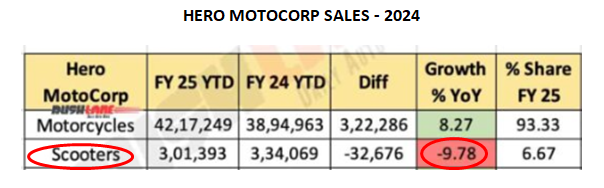
The Indian two-wheeler market has witnessed a significant shift in recent years, with petrol scooters experiencing a notable decline in sales especially in November-December 2024.
This trend is indicative of a broader movement towards sustainable and eco-friendly transportation solutions; signalling the end of the petrol (ICE) age in India.
Ola has a lot of plus on its side and just 1 minus point on its side.
The only minus point is its SOFTWARE GLITCHES on the VCU and Touch Screen. Ola is not the only company to suffer from it. Ather also has this problem.
Let us understand this problem thoroughly.
Software glitches on the VCU & Touchscreen is not just an Ola Electric or Ather problem… its quite common in a lot of vehicles with touchscreen. VCU is used with SIM Card to capture customer data. Ather started this stupid idea of capturing customer data… Ola blindly followed it. No other vehicle in India or any other country captures scooter user data… it is used only in premium vehicles.. not in poor man’s mode of travel.
But since Ather’s customers are premium customers from the higher middle class they either have a 2nd scooter or vehicle at home and are not as desperate as the Ola Electric Customer.
The guy who set fire to the Ola Showroom was depending upon the Ola Scooter to run errands and…