Sadhguru warns that India is “becoming a desert” because of rapid soil degradation, deforestation, and unsustainable farming practices that are leading to what he calls soil extinction.
When Ola Electric burst onto the scene, it wore the cape of affordability. The promise was simple: “We’ll electrify India without electrifying your wallet.” Fast forward to today, and Ola’s S1X+ 3rd Gen sits at a cool ₹1,20,000—the priciest scooter in the market. The Robin Hood of scooters has somehow become the tax collector.
Indians prefer scooter priced around Rs 80,000 … they don’t need touchscreen, maps or music… no subscription either.ATHER & HERO… Before and After implementing BaaS.
Ola’s Premium Misfire
Ola Electric entered with a mass-market pitch but…
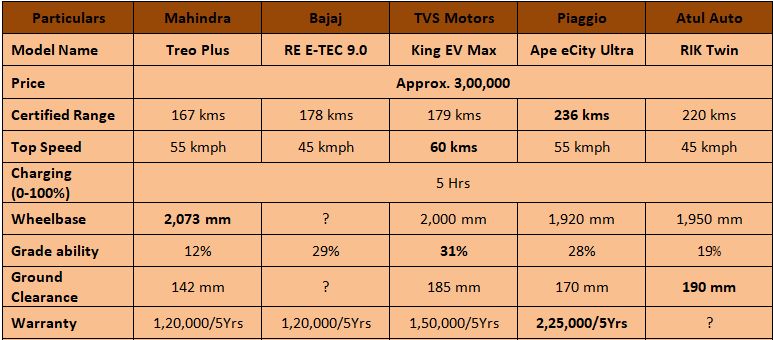
India has become the world’s largest electric three-wheeler market, selling nearly 700,000 units in FY2025. The surge is fuelled by government subsidies, rising fuel costs, and the urgent need for sustainable last-mile transport. Let’s break down the top companies shaping this revolution. (हिंदी के लिए… कृपया नीचे स्क्रॉल करें)
Top Electric Auto Rickshaws in India
The electric auto rickshaw market is booming, with companies like Mahindra, Bajaj, TVS, Piaggio and Atul Auto leading the charge. These brands are scaling record sales, driven by rising demand for clean, sustainable and affordable last-mile mobility.
Let India’s Obsession With Education Meet EV Reality
India has always loved its educational courses — from IIT coaching factories to the booming edtech platforms that churn out millions of learners. With 356 million youth aged 10–24, the country is practically a classroom…
Ola Electric’s roadmap for 2026 is crystal clear: premium electric motorcycles, ShaktiUPS, and Container BESS are the headline acts.
The company seems determined to position itself as a high-tech, premium EV player rather than a mass-market disruptor.
Ola Electric Motorcycles due in 2026
But in the process, we at PlugInCaroo are guessing that Ola appears to have quietly sidelined its Gig scooter, Z-Series scooter, and even the much-discussed electric autorickshaw… the smallCar? well that could be 3-5yrs down the line.
India’s electric two-wheeler revolution, once marked by explosive growth, appears to be entering a phase of consolidation.
After a meteoric rise from 144,000 units in FY2021 to 1.14 million in FY2025, the April–November 2025 figures for FY2026 suggest a slowdown.
With only 700,000 units sold in the first eight months, the market is unlikely to surpass FY2025’s total unless a dramatic surge occurs in the final quarter.
India’s electric 2-wheeler growth FY 2026: FLAT
This deceleration raises a critical question: Has the E2W market plateaued?
In India’s electric two-wheeler market, Bajaj Chetak and TVS iQube stand tall on paper. Their sales figures are impressive, their legacy brands trusted, and their technology refined.
Yet, a curious contradiction persists: despite being top sellers, they remain nearly invisible on the roads.
This paradox — of high sales but low street presence — raises important questions about how we measure success in India’s EV transition.
The Numbers Say “Top Seller”
Since their launch in 2020, both TVS iQube and Bajaj Chetak have climbed the sales charts. Both have…




 PlugInCaroo... Karo plugin... abhi!... save the environment!!!