
The Delhi EV Policy 2.0 (2026–2030) (draft) represents a watershed moment for the Indian automotive sector, pivoting the national capital from a policy of encouragement to one of mandatory transition.
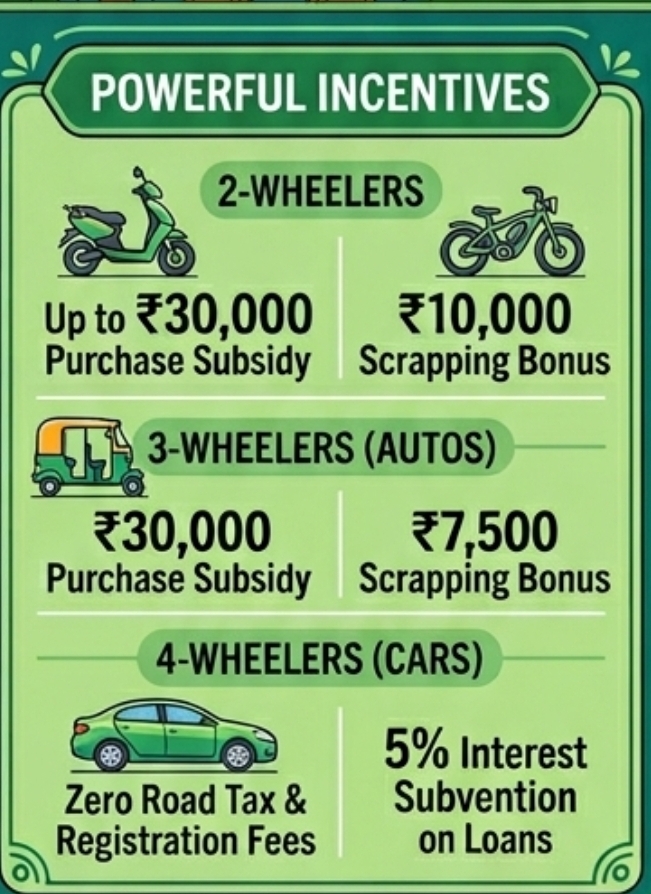
For a vertically integrated manufacturer like Ola Electric, this regulatory framework acts as a powerful tailwind, offering a unique convergence of market dominance, fiscal incentives, and structural advantages rooted in their in-house cell manufacturing capabilities.
No NEW PETROL 2-Whelers after 2028:
The most significant impact of the 2.0 policy is the definitive timeline for the phase-out of internal combustion engines (ICE).
By banning new registrations of petrol-powered two-wheelers starting April 1, 2028, the Delhi government is effectively handing the market over to established EV leaders… Govt could have benefited more by raising Petrol prices to Rs 150 or Rs 200/Ltr... but Baning Petrol 2-Wheelers is a good ideal … it gives a VERY CLEAR MESSAGE to the companies that keep manufacturing peteol scooters which are detrimwntal to Indian Currency.
Any company that weakens the Indian currency should be dealt sternly and given no discounts and ZERO TAX BENEFITS… and any company that strengthens the Indian currency should be given maximum benefits, tax benefits and subsidies.
Given that two-wheelers comprise nearly 70% of Delhi’s and India’s vehicle population, they consume a huge level of PETEOL. Thus… this “hard pivot” was necessary to reduce pressure on Indian Currency.
BAN ON PETROL 2WHEELERS FOR GIG WORKERS
While most 2Wheeler owners ride approx 40kms per day… the GigWorkers ride approx 250kms every single day. This requires a very high consumption of Petrol for their vehicles. Plus they have to visit the petrol pump almost 5 times a day to cover 250kms. Both of this can be avoided with a RoadsterX+ 500km range bike. Low Ola Roadster price and low monthly EMI ensures easy transition.
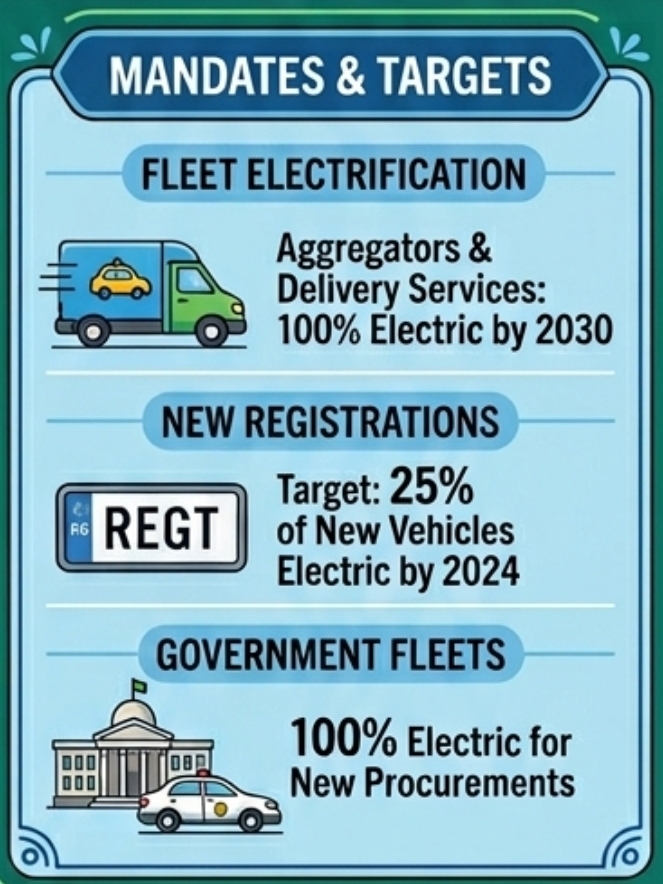
Thus…the immediate restrictions on delivery and aggregator fleets beginning in 2026 creates a high-volume B2B opportunity.
Meaning…from this yr onwards (2026) there will be no More addition of Petrol 2-Wheelers for aggregators fleet operators like Ola-Rapido-Uber Bike-Taxi or Zomato-Swiggy-Zepto-Blinkit like delivery. They have to use electric 2-wheelers.
Ola’s existing eScooter with 300+kms range … and RoadsterX+ with 500kms (IDC) range are well-positioned to absorb this commercial demand as gig-economy players will shift to electric 2Wheelers. Most food/grocery delivery fleet have already shifted… but now the BikeTaxi operators too would be required to shift.
BikeTaxi operators after shifting to Ola RoadsterX+ will benefit with Rs 15,000 per month which he was paying for petrol refueling. (In 10yrs it will be 15L in his bank… aageye na 15 Lakh aap ke bank me?).
Ola RoadsterX+ with a range of 500kms is perfectly suited to take on this shift. The low cost of the electric motorcycle and low EMI mean… its very easy for any existing user to switch to Ola RoadsterX+ easily.
Advantage of In-House Cell Production
While the policy benefits all EV players… Ola Electric has a disproportionate advantage… due to its Lithium-ion cell manufacturing.
LI-Ion cell manufacturing is extremely difficult thats why till now even the biggest companies are moving slowly and is still at least 5yrs to producing a single cell in India… maybe whem Ola succeeds they will copy that success. But till that happens there is nothing on the ground except MoU and MoU signing games.
As state and central governments tighten “Domestic Value Addition” (DVA) norms, many competitors who rely on imported cells may struggle with subsidy eligibility or rising import costs.
Ola’s Gigafactory allows the company to meet localization requirements comfortably, ensuring their vehicles remain eligible for Delhi’s ₹10,000 per kWh purchase subsidy.
By manufacturing the battery cell, which accounts for roughly 40% of a vehicle’s cost, Ola captures the manufacturer’s margin on the most expensive component.
This vertical integration provides a cost cushion that assembly-only competitors cannot match, allowing Ola to maintain aggressive pricing even as subsidies wind down.
Circular Economy and Infrastructure Synergy
The 2026 policy emphasizes a circular economy, specifically focusing on battery recycling and component recovery.
Ola’s control over its cell chemistry (such as LFP) provides a technical advantage in secondary life applications and mineral recovery.
As the Delhi government establishes recycling hubs, Ola is uniquely positioned to create a closed-loop system in the National Capital Region (NCR), potentially lowering the cost of raw materials for future production.
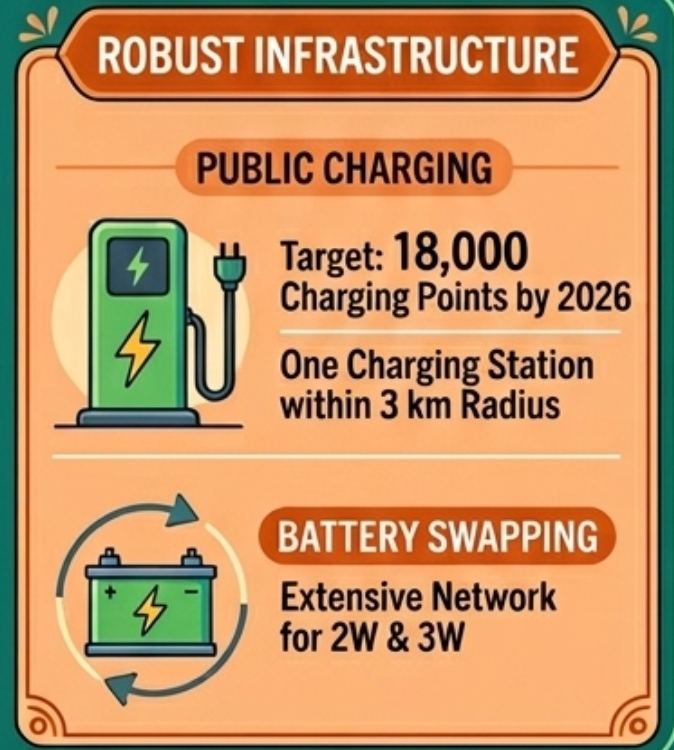
Additionally, the mandate for “EV-ready” buildings and the requirement for dealers to install public charging stations complement Ola’s existing infrastructure goals.
Conclusion
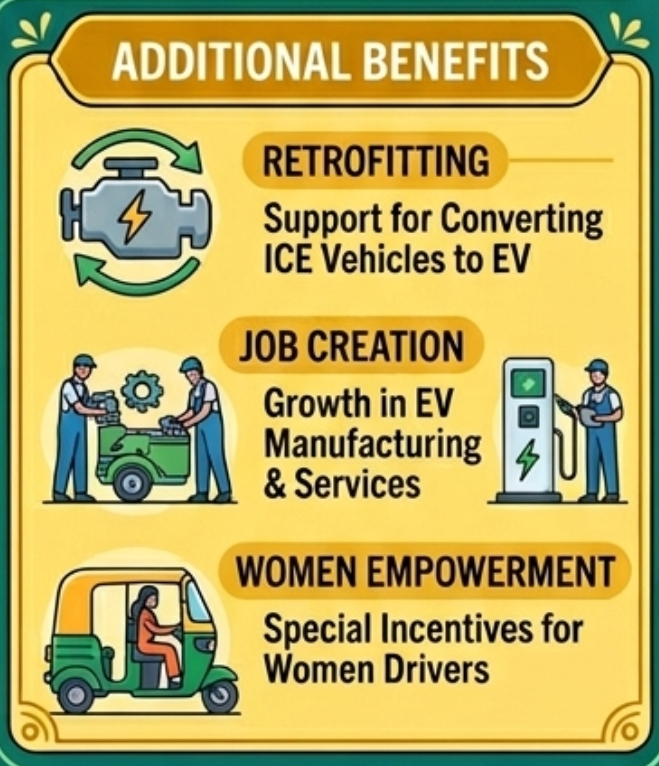
The Delhi EV Policy 2.0 is more than just a set of subsidies; it is a structural redesign of the urban transport economy. For Ola Electric, the policy validates its long-term bet on vertical integration.
The Delhi EV Policy 2.0 could be the template which most other states would be basing their EV push.
Thus the immediate demand created by ICE bans with the long-term cost advantages of in-house Li-ion cell production, Ola is well positioned to transition from a market participant to the primary architect of India’s electric mobility future.

