
The transition to sustainable energy is often framed as a technical challenge, but in reality, it is a psychological one.
For decades, the internal combustion engine (ICE) has been the undisputed heartbeat of Indian mobility and domestic power.
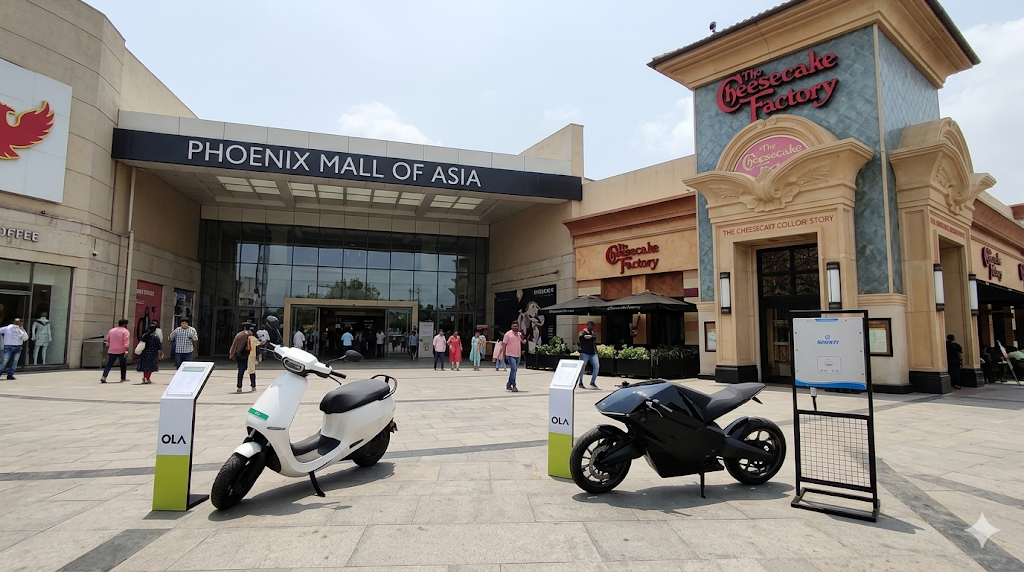
To break this inertia, the strategy must shift from passive availability to aggressive accessibility. As the adage suggests, “if the horse doesn’t come to the river, take the river to the horse.”
For Ola Electric, this means embedding its ecosystem—eScooters, eMotorcycles, and the Shakti inverter—directly into the high-traffic corridors of daily life.
The Power of Visibility and Tangibility
The traditional showroom model operates on the assumption that a customer is already mid-way through their “buying journey.”
It requires a conscious effort: taking a day off, navigating traffic, and entering a high-pressure sales environment. This creates a barrier for the “common man” who may be curious about EVs but remains hesitant due to a lack of familiarity.
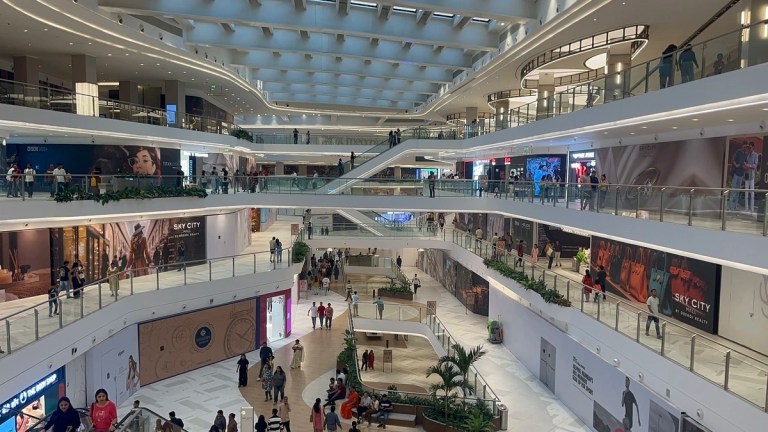
By establishing dedicated experience centers in premier locations like the Mall of Asia in Bengaluru and SkyCity Mall in Borivali, Mumbai, Ola Electric can tap into massive, consistent footfall.
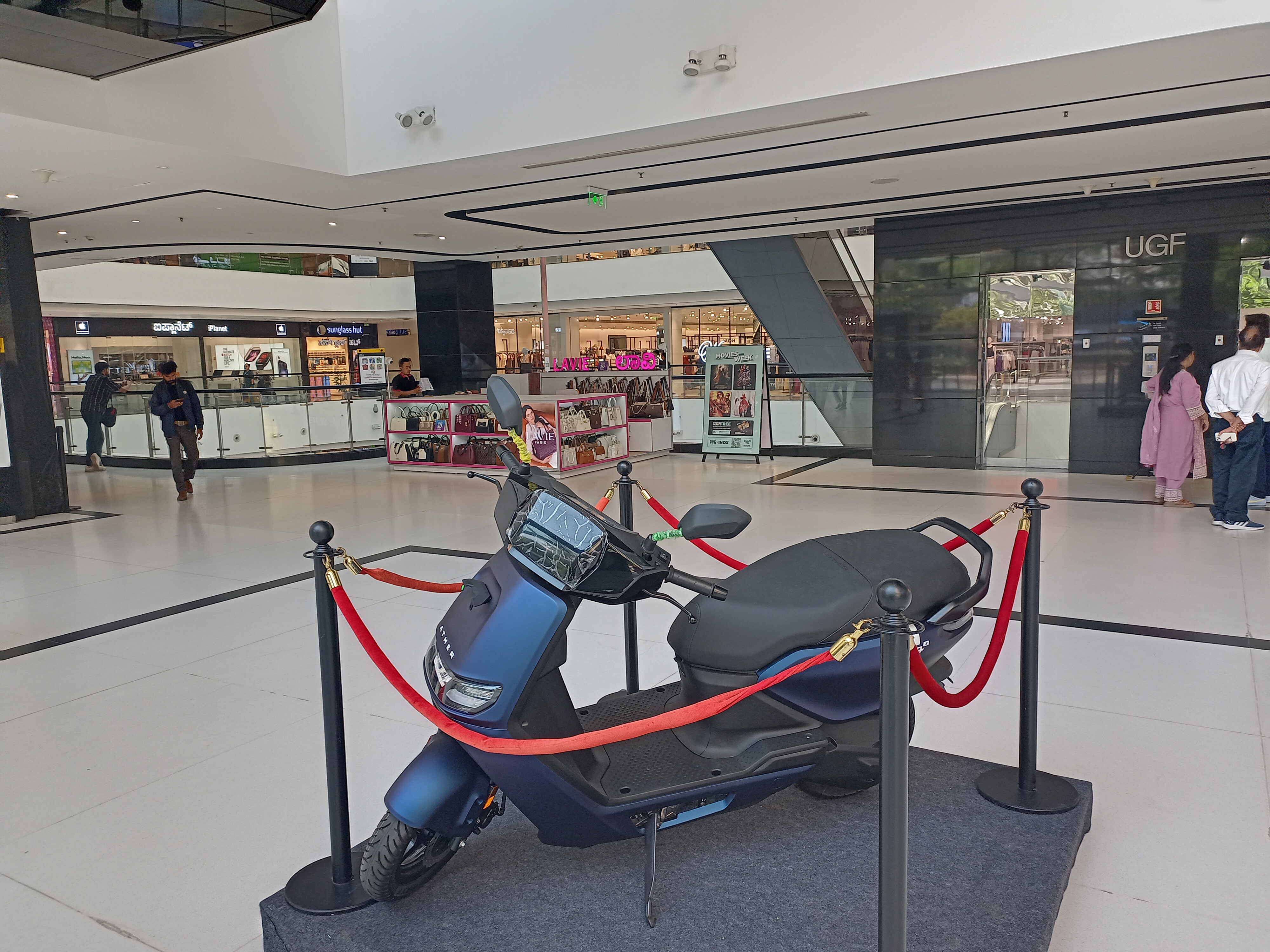
In these environments, the product stops being a digital advertisement and becomes a tangible reality.
The “Leisure” Advantage: When a family visits a mall, they are in a receptive, relaxed state of mind. Seeing the sleek design of an eMotorcycle or the compact utility of the Shakti inverter while walking to a cinema or food court lowers the barrier to entry.
Immediate Interaction: Allowing a potential user to touch the materials, test the UI of the dashboard, and understand the charging ecosystem without the “commitment” of a showroom visit builds immediate trust.
Integrating the Full Ecosystem
Taking the products to the masses isn’t just about mobility; it is about energy independence.
eScooters and eMotorcycles: These represent the future of the Indian commute. In cities like Bengaluru and Mumbai, where congestion is a daily reality, displaying the agility and cost-savings of electric two-wheelers in a mall setting makes the value proposition hit home.
The Shakti Inverter: Home energy security is a major concern for the Indian middle class. By showcasing the Shakti inverter alongside the vehicles, Ola demonstrates a holistic “Electric Life.” It shows the consumer that the same technology powering their commute can protect their home from power cuts, creating a unified brand of reliability.
Eliminating the “Friction of Effort”
The most significant advantage of a mall-based display is the on-the-spot test ride. If a customer can take an eScooter for a quick spin in a designated mall parking zone, the “mystery” of EV riding vanishes instantly. It transforms a complex logistical task into a twenty-minute experiential highlight of their weekend.
Conclusion
To lead the global shift toward electrification, Ola Electric must meet the people where they already are.
Utilizing the high-density environments of India’s largest malls is more than a marketing tactic; it is a democratization of technology.
By placing the river directly in front of the horse, Ola ensures that the transition to an electric future is not just an option for the enthusiast, but an inevitable and easy choice for every Indian citizen.

