
This is just a Game Theory… but it seems US is trying to go for Saudi Oil… (via Yemen) … because Saudi Oil is the low hanging fruit… and prevent Saudi Oil from selling in any other currency than the toilet paper currency of US Dollar… and Make America Great Again.
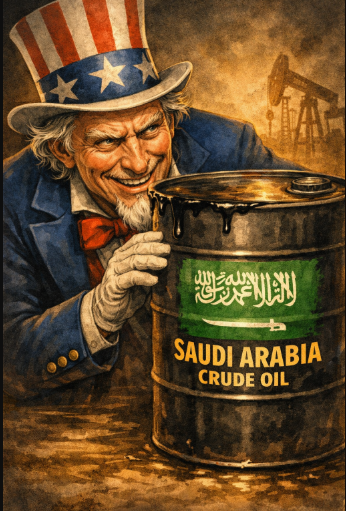
US could overrun Saudi in a week or less… but if this Game theory is correct… US will deliberately avoid the Venezuela Playbook of shock and awe… and could use the Syria Playbook… bringing a year-long or multi-year Civil War in Saudi and blame Houthis for that… Saudi could loose most of its existing infrastructure and resemble Syria or Gaza… MBS could be over-thrown via a US supporting another Saudi Leader.… War is coming to Saudi… read on:
The theater of war could shift to Yemen… while a few bombs will continue to be dropped on Iran. Lets hope such a situation never happens because it might crush the Asian countries… especially those not BUYING OIL and Gas from Russia.
For this to happen bab el mandeb has to remain closed ALONG with Strait of Hormuz… and there has to be immense pressure on Crude Oil… (that is the reason US will not allow Iran to control the Straits of Hormuz.. because then US cannot CONTROL the SALE OF Crude OIL by Gulf States.
By shutting down ENTIRE Oil Supply to ASIA… the Asian countries will suffer great economic recession while the gain for US will be immense:
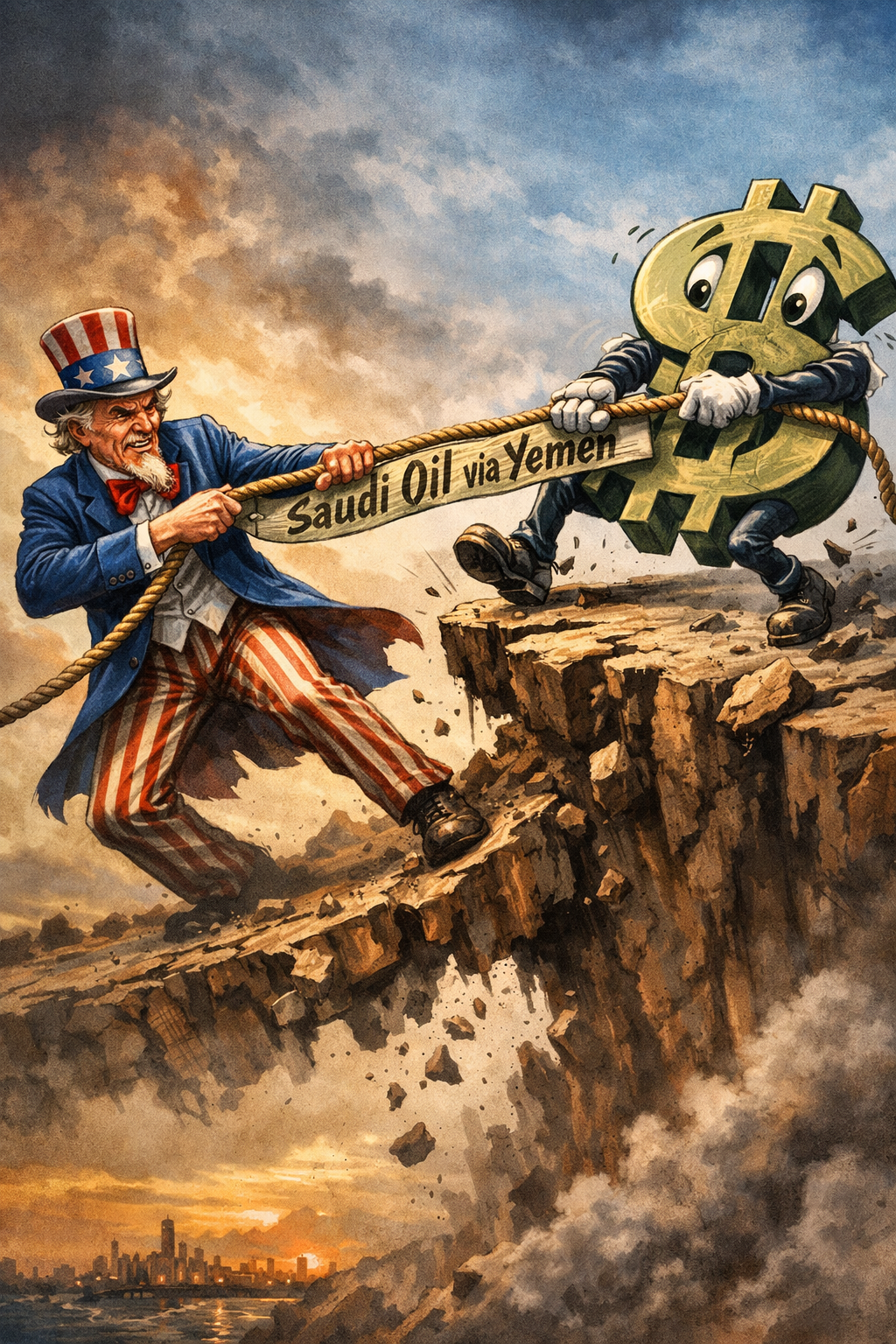
- Leverage: The U.S. would gain extraordinary leverage over Asian economies. Nations such as China, India, Japan, and South Korea are heavily dependent on imported crude.
to fuel their industries, transportation, and electricity generation. A sudden disruption would force these countries to scramble for alternatives, and in many cases,
the only viable option would be to turn to U.S. suppliers or U.S.-controlled trade routes.
Such a situation could affect the 2 main consumers China and India. (Countries to suffer in such a situation will be India and Brazil because China and Russia will be able to source their fuel independently). US does not look upon these countries (Russia, China, India and Brazil) as a friend.
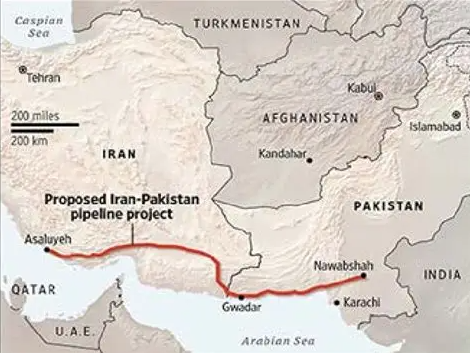
- Re-Establish PetroDollar: This would reinforce the petrodollar system, as transactions would almost certainly be denominated in dollars,
strengthening American financial dominance. (Main country to suffer will be India). - Make EXTRAORDINARY trade DEALS in favour of USA – (Main country to suffer will be India).
- Extract political concessions
- Extract security alignments from Asian powers.
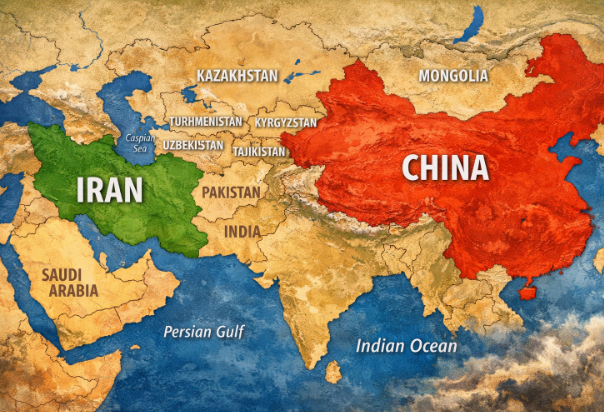
In game theory terms, the U.S. would hold a dominant strategy, forcing others into suboptimal equilibria where compliance becomes the least costly option.
However, the risks and costs of such a move would be staggering. Shutting down crude supply would:
– Trigger a global oil shock,
– Send Crude Oil prices skyrocketing and
– Destabilize not only Asia but also Western economies that rely on stable energy markets. Allies like Japan and South Korea would suffer, potentially straining U.S. alliances.
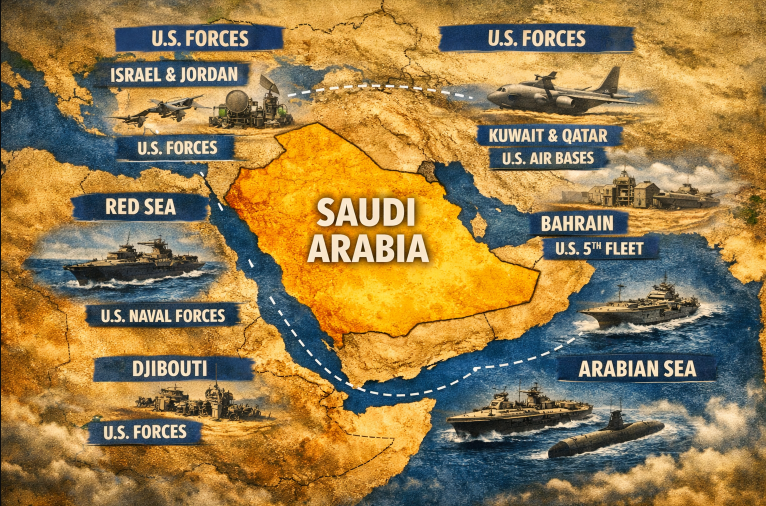
To explore this, it is useful to frame the issue as a debate, weighing the arguments of those who see deliberate strategy against those who dismiss the hypothesis as flawed.
U.S. involvement in Yemen could be a calculated move to indirectly pressure Saudi Arabia.
By engaging in the Yemeni conflict, Washington could destabilize Riyadh’s southern flank, forcing Saudi Arabia into compliance without the risks of direct confrontation.
Compared to Iran, which has proven to be a tough-nut to crack… resilient and costly to confront… Saudi Arabia could be seen as a “low-hanging fruit.”
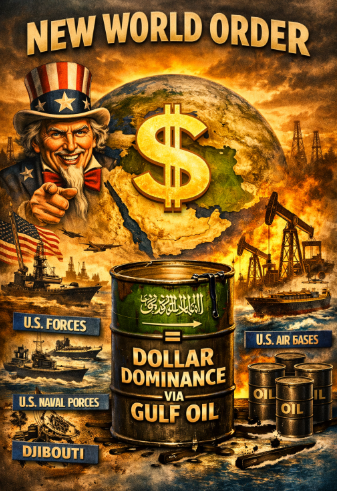
Saudi Arabian economy is heavily dependent on oil exports, making it more vulnerable to external manipulation. From this perspective, the U.S. could use Yemen as a lever to reinforce the petrodollar system.
If Saudi oil trade were disrupted, major importers such as India might be compelled to transact exclusively in U.S. dollars, thereby strengthening dollar hegemony.
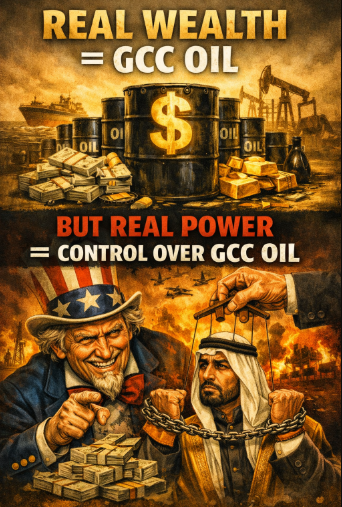
In game theory terms, this would represent a Nash equilibrium … in which the U.S. reduces or even avoids the high-risk confrontation with Iran… secures leverage over Saudi oil… and locks India (the BRICS Chair) into dollar-based trade.
The disruption could also provoke military escalation, as energy insecurity often fuels conflict.
The payoff matrix suggests that while the U.S. might enjoy short-term leverage, the long-term equilibrium could be unstable and even detrimental to American interests.

