
India’s electric two-wheeler revolution is no longer confined to metropolitan pockets—it has spread across the length and breadth of the country.
The sales data reveals fascinating insights into how different states are embracing sustainable mobility, with some regions emerging as clear leaders in adoption.
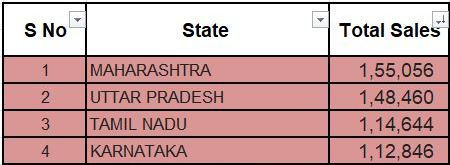
Maharashtra tops the chart with 1,55,056 units, reflecting its strong urban demand, robust infrastructure, and policy support.
To maximize returns on capital investment, battery swapping and charging stations must concentrate on the neighboring states of Maharashtra, Karnataka, Tamil Nadu, and Kerala, because these regions represent the densest clusters of electric two-wheeler adoption in India. Together, they account for nearly 4.5 lakh units sold, forming a contiguous southern-western corridor of high demand.
Swapping/Charging Infrastructure benefits here:
- Maharashtra anchors the west with the highest sales nationally.
- Karnataka and Tamil Nadu provide strong industrial bases and urban density, ensuring rapid utilization of swap/charge facilities.
- Kerala adds eco-conscious consumer demand, complementing the industrial strength of its neighbors.
This cluster offers:
- Economies of scale – concentrated demand reduces per-unit infrastructure costs.
- Network efficiency – contiguous geography allows seamless intercity EV travel.
- Policy synergy – all four states have active EV policies, subsidies, and industrial corridors that support rapid rollout.
In short, prioritizing these states ensures high utilization, faster ROI, and stronger consumer adoption, making them the most strategic geography for investors in swapping and charging infrastructure.
Uttar Pradesh follows closely at 1,48,460 units, showing how even non-metro-heavy states are rapidly adopting EVs.
Tamil Nadu and Karnataka, with 1,14,644 and 1,12,846 units respectively, highlight the southern states’ strong manufacturing base and consumer enthusiasm.
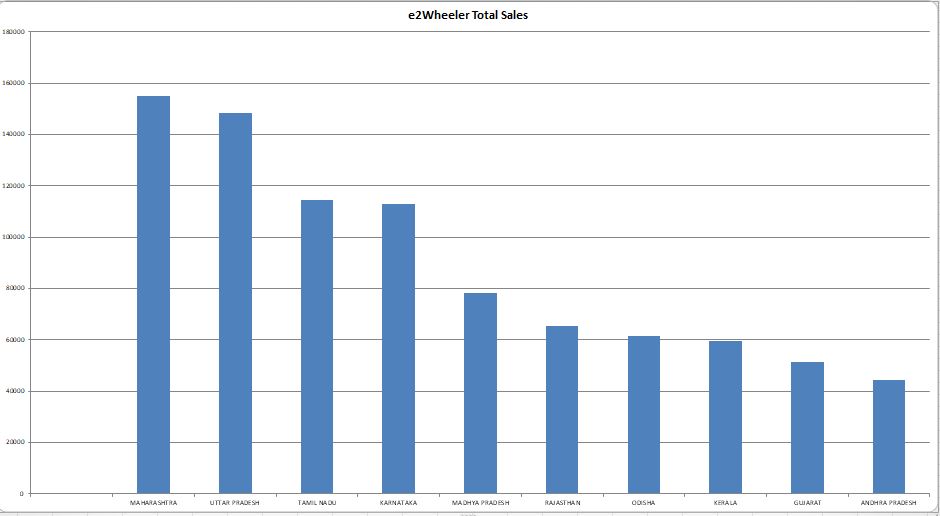
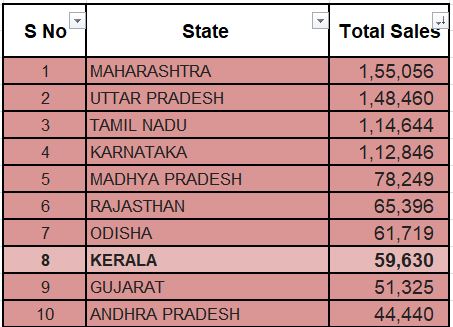
Kerala stands out as one of the more eco-conscious states in India’s electric two-wheeler adoption story. With 59,630 units sold, it ranks 8th nationally, ahead of larger states like Gujarat and Andhra Pradesh.
Why Kerala is significant
- Eco-conscious consumers – Kerala has a long tradition of environmental awareness, which translates into higher acceptance of green mobility solutions.
- Urban density – Cities like Kochi and Thiruvananthapuram face congestion, making electric scooters an attractive alternative for short commutes.
- Policy support – The state government has actively promoted EV adoption through subsidies and charging infrastructure initiatives.
- Tourism impact – With Kerala’s focus on sustainable tourism, EVs are increasingly seen as part of eco-friendly travel solutions.
Comparative Insight
Kerala’s numbers are impressive when compared to states of similar population size. Kerala is India’s 2nd smallest state… but sells more vehicles that much larger Gujarat and Andhra Pradesh. Gujarat (51,325 units) lags behind despite its industrial strength. This suggests that Kerala’s consumer mindset and policy framework are more aligned with sustainability goals.
Why UP Ranks No.2 in EV Sales:
Agrarian Economy Contrast: While agriculture dominates employment, rising disposable incomes and urban migration are fueling consumer demand for EVs.
Population Scale: With over 200 million residents, even modest adoption translates into very high absolute numbers.
Urban Expansion: Cities like Lucknow, Kanpur, Noida, Ghaziabad, and Varanasi are rapidly urbanizing, creating demand for affordable two-wheeler mobility.
Affordability Factor: Electric scooters are cheaper to run than petrol bikes, appealing to UP’s large lower-middle-class consumer base.
Policy Push: UP’s EV policy offers subsidies, charging infrastructure, and incentives for manufacturers, encouraging adoption.
Industrial Development in Uttar Pradesh 🏭
- Massive Investments: Since 2017, UP has attracted investment proposals worth ₹50 lakh crore, with projects worth ₹15 lakh crore already implemented, creating nearly 60 lakh jobs.
- Infrastructure Expansion: The state now has 22 expressways (9 operational, 3 under construction, 10 proposed), plus the upcoming Noida International Airport, strengthening logistics and connectivity.
- Industrial Clusters: Focus areas include electronics manufacturing, defence, aerospace, textiles, food processing, and renewable energy. Special Economic Zones and industrial corridors (Lucknow–Kanpur, Noida–Jewar) are being developed.
- FDI Growth: Cumulative FDI inflows reached ₹17,003 crore (US$ 2.15 billion) between 2019–2025, with strong investor confidence in data centers and clean energy projects.
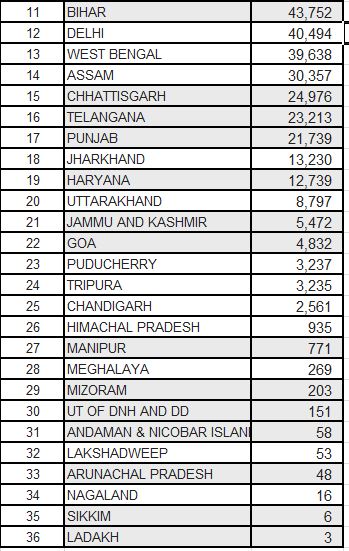
On the other hand Rajasthan is the largest state in India but is 6th.
Challenges Ahead
- Charging infrastructure gaps in rural areas.
- High upfront costs still deter some buyers.
- Battery swapping networks are limited to states like Karnataka and Tamil Nadu.
Conclusion 🌍
Kerala’s adoption reflects a values-driven market, where environmental consciousness and urban mobility needs converge. If infrastructure expands and costs reduce further, Kerala could climb into the top 5 EV states in the coming years.

