
Harmony with Nature vs. Input Substitution:
In an era dominated by industrial agriculture, chemical dependence, and deteriorating soil health, the global search for sustainable food production has brought ecological farming to the forefront.
Among the most prominent sustainable paradigms are Organic Farming and Natural Farming. While both systems share a foundational refusal of synthetic fertilizers, chemical pesticides, and artificial growth enhancers, they diverge fundamentally in their philosophy, economic models, and day-to-day land management.
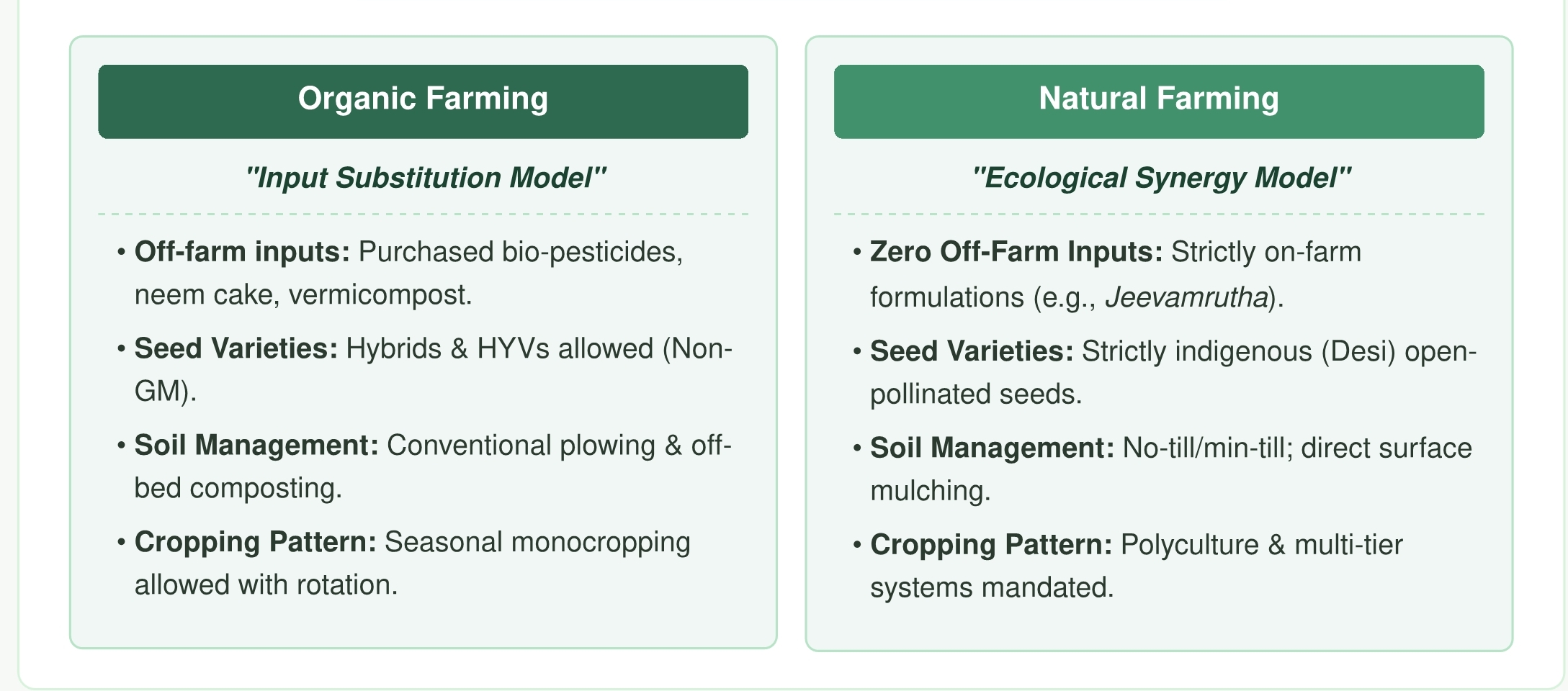
Understanding the distinction between the two requires examining not merely what they exclude, but how they interact with seed technology, cropping patterns, soil biology, and human intervention.
The Core Philosophies are:
Substituted Inputs vs. Ecological Non-Intervention
To understand the operational differences between Organic and Natural Farming, one must first look at their governing ideologies.
Organic Farming is essentially an input-substitution model. It recognizes that crops require nutrients and protection from pests, but replaces chemical inputs with certified organic alternatives.
It relies on standard agricultural techniques—such as tilling, bed preparation, and pest management—while substituting urea and synthetic organophosphates with vermicompost, neem cake, bone meal, and bio-pesticides.
Because these inputs are often commercially manufactured off-farm, organic farming typically operates within a structured, market-driven, and highly regulated certification framework.
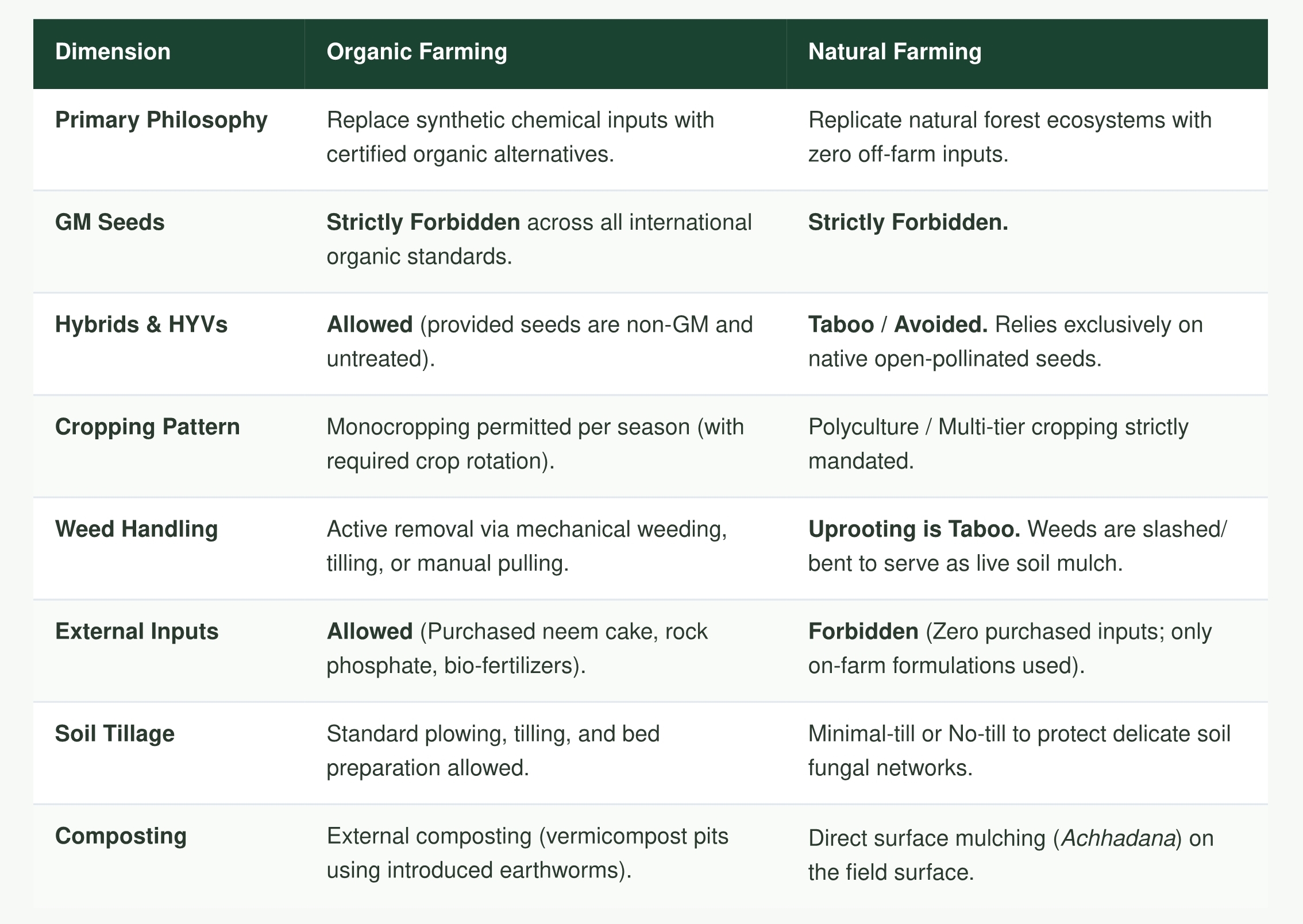
Natural Farming, by contrast, is a philosophy of minimal human intervention and complete self-reliance. Pioneered globally by Masanobu Fukuoka through his “Do-Nothing Farming” approach.
It was adapted in India through Rajiv Dixit and Subhash Palekar’s Zero Budget Natural Farming (ZBNF) / Bharatiya Prakritik Krishi Paddhati, Natural Farming views the farm as a self-sustaining ecosystem modeled after natural forests.
It asserts that nature provides all necessary nutrients through living soil biology, plant interactions, and indigenous micro-organisms.
Natural farming strictly forbids purchasing any external inputs, seeking instead to eliminate input costs entirely by using what exists on the farm itself.
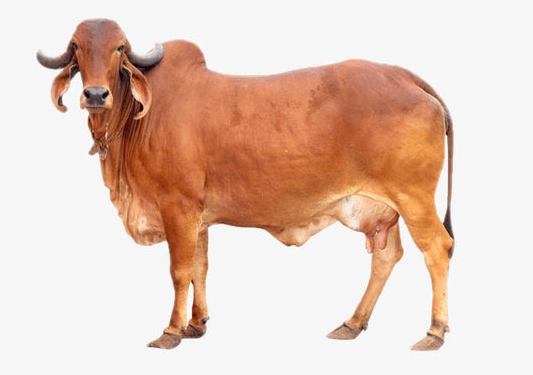
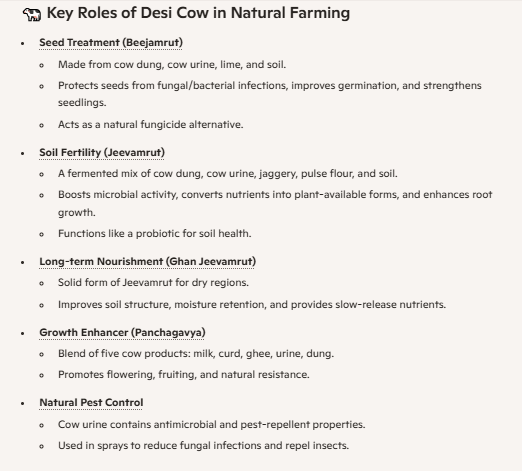
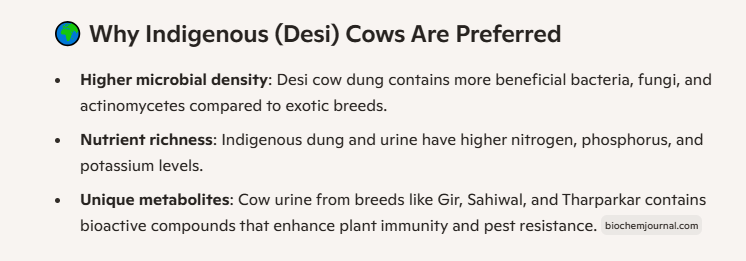
In natural farming, the Desi (indigenous) cow is considered the cornerstone… its dung and urine provide microbial-rich, nutrient-dense inputs that replace chemical fertilizers and pesticides. Preparations like Jeevamrut, Beejamrut, and Panchagavya are all derived from Desi cow products, making the cow central to soil fertility, seed protection, and pest management.
Seed Dynamics: GM, Hybrids, and Indigenous Varieties
Seed selection represents one of the most critical crossroads between the two methodologies:
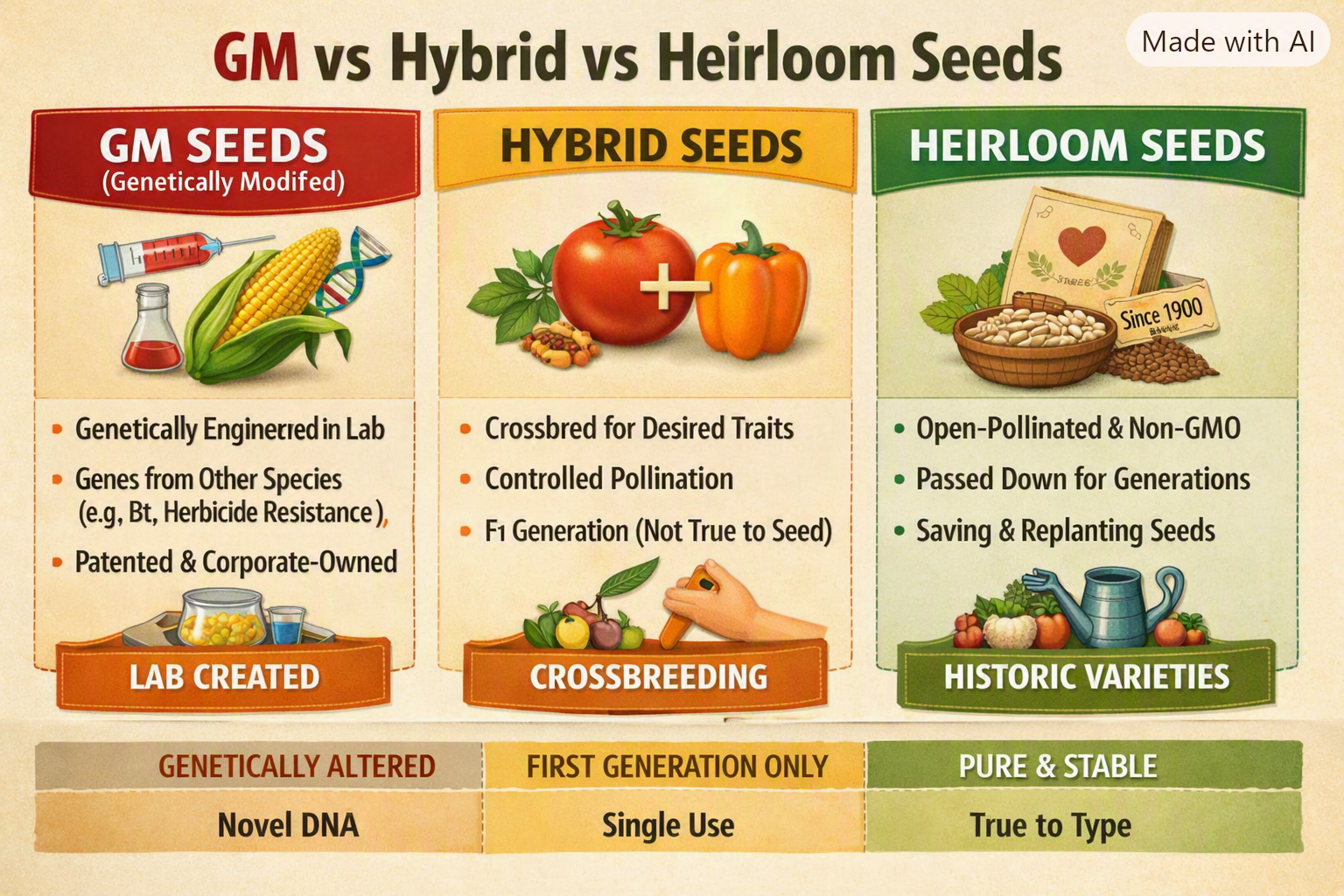
- Genetically Modified (GM) Seeds: Both Organic and Natural Farming maintain an absolute prohibition against GM seeds. Genetic modification is viewed by both systems as an unnatural disruption of plant genetics that poses long-term ecological and biodiversity risks.
- Hybrids and High-Yielding Varieties (HYVs):
- In Organic Farming: Non-GMO hybrid seeds and High-Yielding Varieties are widely allowed and utilized. Organic producers often depend on high-yielding hybrids to maintain commercial viability, seed uniformity, and disease resistance.
- In Natural Farming: Hybrids are strictly discouraged or taboo. Natural farming relies exclusively on open-pollinated indigenous (desi) seed varieties. The rationale is twofold: hybrids are typically bred to perform under heavy nutrient feeding (which requires higher inputs), and they cannot yield viable, true-to-type seeds for the next generation. Indigenous seeds, on the other hand, are resilient, locally adapted, and preserve the farmer’s complete seed sovereignty.
Field Management: Cropping Systems, Weeding, and Soil Ecology
The contrast between Organic and Natural Farming becomes most visible in daily field management, particularly regarding cropping layout, weed handling, and soil disturbance.
1. Monocropping vs. Polyculture
Organic farming permits monocropping within a given season—allowing an entire field to be planted with a single crop like organic soy or wheat—provided the farmer rotates crops seasonally.
In Natural Farming, monocropping is strictly taboo. Nature never grows a single species in isolation. Consequently, Natural Farming mandates polyculture, inter-cropping, or multi-tier canopy cropping (combining tall trees, medium shrubs, and ground cover). This spatial diversity creates a balanced ecosystem where different plant root systems share nutrients, shade the soil, and naturally suppress major pest outbreaks.
2. The Role of Weeds
To an organic farmer, weeds are resource competitors that absorb water and soil nutrients meant for the cash crop. Organic farming actively manages weeds through mechanical weeding, tractor cultivation, manual pulling, or organic-approved bio-herbicides.
To a natural farmer, uprooting weeds is forbidden. Weeds are viewed as “soil healers”—pioneer plants that cover bare earth, prevent soil erosion, and pull deep minerals to the surface. Instead of removing them, natural farmers practice slashing or bending weeds down to create live mulch. This keeps the root systems intact to stabilize the soil while the top biomass decomposes into natural organic matter.
3. Tilling and Composting
Organic farming utilizes standard tractor plowing and off-field composting (such as vermicompost pits using introduced earthworms like Eisenia fetida) to prepare soil and supply nutrients.
Natural Farming treats deep plowing and external composting as unnecessary and harmful disruptions to soil ecology. Plowing breaks up delicate fungal networks (Mycorrhizae) and destroys native earthworm burrows. Instead of making compost in separate pits, Natural Farming practices direct surface mulching (Achhadana) and applies native microbial inoculants (such as Jeevamrutha, made from local cow dung and urine) directly to the soil surface to feed endemic earthworms and native micro-flora.
Summary Comparison
| Dimension | Organic Farming | Natural Farming |
|---|---|---|
| Philosophical Goal | Replace chemical inputs with organic alternatives | Replicate natural forest ecosystems with zero off-farm inputs |
| Seeds Allowed | Non-GM Organic Seeds, Hybrids, and HYVs | Strictly Indigenous / Native Open-Pollinated Seeds |
| Cropping Pattern | Monocropping permitted per season (with crop rotation) | Polyculture / Multi-tier cropping strictly mandated |
| Weed Management | Active control (mechanical weeding, pulling, tilling) | No uprooting; weeds are slashed/bent to serve as live mulch |
| Soil Tillage | Standard plowing and seedbed preparation allowed | Minimal-till or No-till to protect soil microbiology |
| Composting | External composting (vermicomposting, compost pits) | Direct surface mulching (Achhadana) on the field. Cow dung, Urine. Composting in Bio-digester |
| Input Economics | Medium to High (purchased bio-inputs, certification fees) | Near Zero (uses only on-farm resources like Jeevamrutha) |
| Certification | Requires third-party audits, documentation, and accreditation. Products can carry official seals (eg: USDA Organic, EU Leaf, India Organic). | No certification process; credibility depends on farmer reputation and consumer trust. |
Conclusion
While Organic and Natural Farming share the fundamental goal of eliminating synthetic agricultural chemicals, they represent two distinct paths toward sustainable land stewardship.
Organic Farming works within structured agricultural frameworks, replacing synthetic chemicals with commercial bio-inputs, high-yielding hybrid seeds, and managed field practices.
Natural Farming offers a radical return to ecological self-sufficiency, treating the farm as a living forest where indigenous seeds, zero-till soils, unplucked weeds, and biological diversity work in harmony to produce food without commercial dependence.
FINAL WORD: These principles are not universal… agriculture may or may not be possible, in each region… it depends upon the regions climate and geography… the cold or warm or rain or snow fall in your climate and how you geography is… if it is hilly, angle of slope of your land, flat, rocky or sandy etc.
Orgainc Farming and Animal as Food is more suitable for colder countries having snowfall… Natural Farming is more suitable for Tropical countries with Warm and Humid climate.
Plants thrive in Warm and Humid climate with enough water to survive… while Animals thrive in colder weather.

