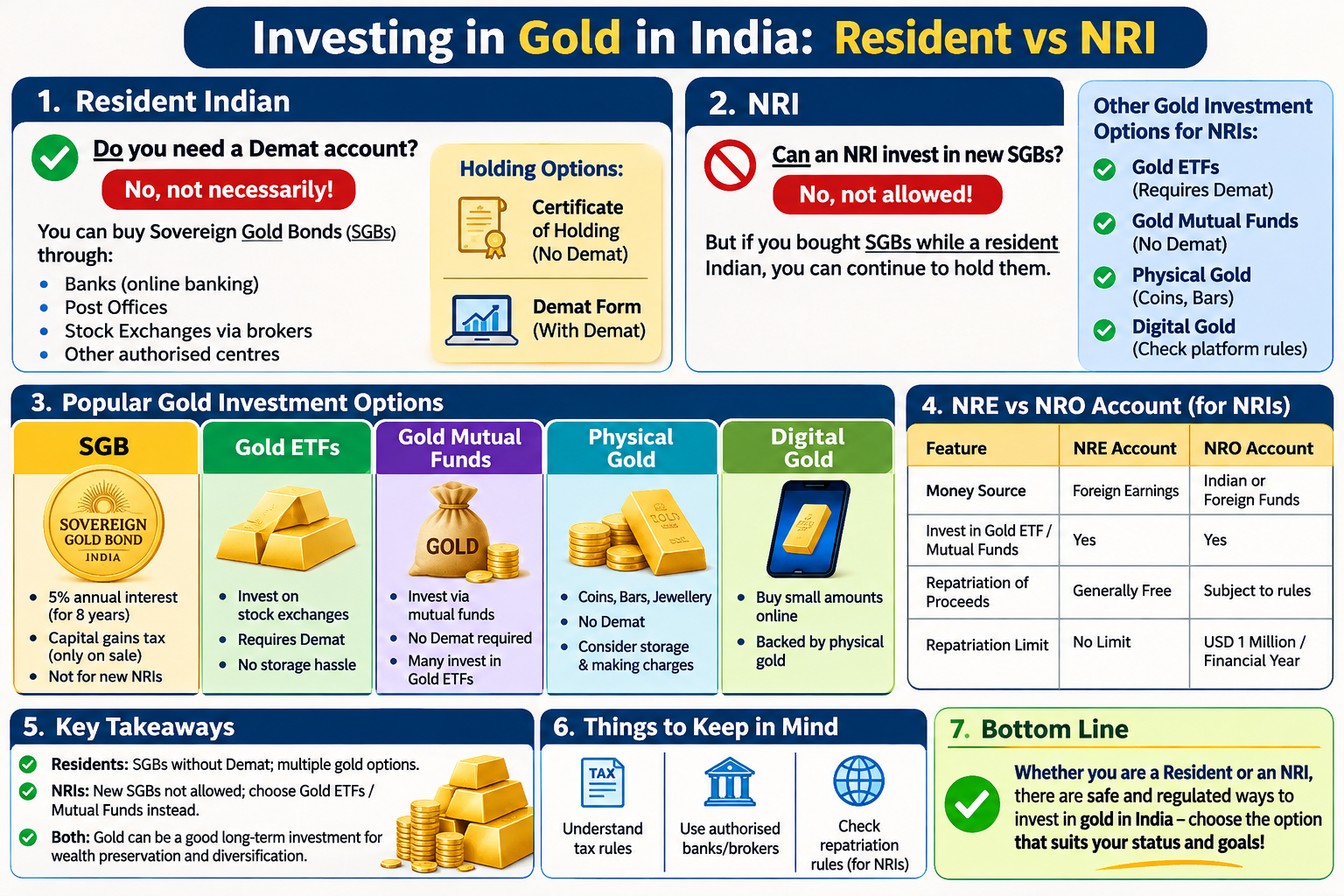
For centuries, gold has occupied a singular place in human history. It has backed national currencies, funded empires, and served as the ultimate store of wealth during geopolitical turmoil.
Unlike fiat paper currencies—which can be printed at will by central banks—gold is a tangible, finite asset with intrinsic value.
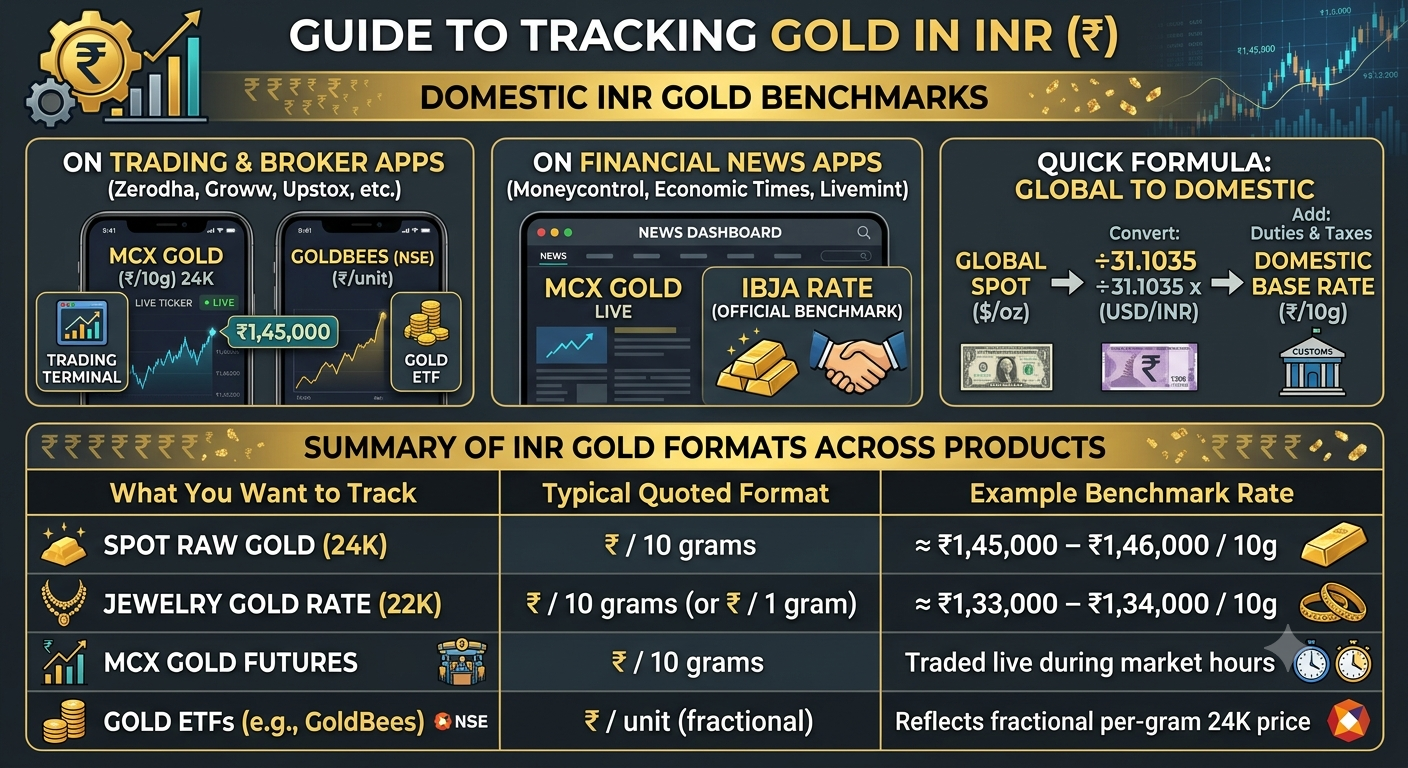
When the media reports that the “gold rate increased”, it refers to the base market price (spot rate) of pure 24-karat raw gold (999 purity), excluding taxes, retail margins, or manufacturing costs.
Because 24k raw gold serves as the baseline benchmark, a price movement directly impacts physical gold (bars, coins, and jewelry) and gold derivatives (Sovereign Gold Bonds, ETFs, and futures).
(This is not a buy or sell advice. All investments are subject to risks. Consult your financial advisor before you invest in anything. This is just an educational take on investing in Gold).
1. Core Reasons to Invest in Gold
Gold is fundamentally a defensive asset. While equities and real estate generate active growth through earnings or rental yields, gold serves as an anchor of security within a diversified portfolio.
- Inflation Hedge & Purchasing Power Retention: Gold maintains its real purchasing power over long horizons. As central banks expand money supplies and consumer prices rise, gold’s nominal market price typically adjusts upward, preserving capital against currency debasement.
- Portfolio Diversification & Low/Negative Correlation: Gold exhibits a low or negative correlation with equities and fixed-income assets. During stock market sell-offs, gold often holds its value or gains, reducing total portfolio drawdown.
- Ultimate Safe Haven in Crisis: Geopolitical conflicts, currency collapses, and systemic financial shocks drive capital toward liquid, non-counterparty assets. Gold carries zero default risk, as its value is not contingent upon a corporate issuer or sovereign debtor fulfilling a promise.
- Liquidity & Universality: Gold can be bought, sold, or converted into cash anywhere in the world 24/7 without regulatory conversion barriers.
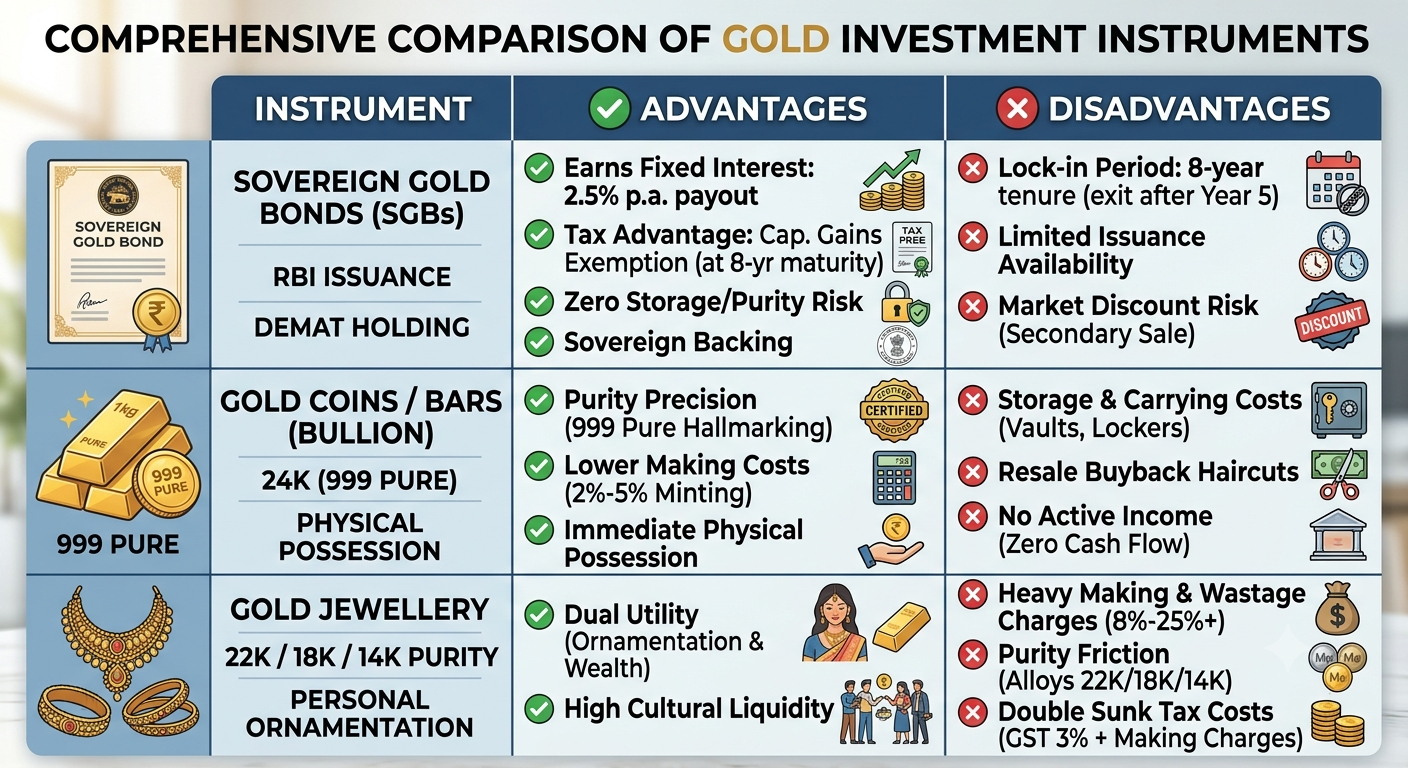
2. Comparing Gold Formats: Advantages & Disadvantages
3. Why Indian Households Should Shift from Physical Gold to Sovereign/Paper Gold?
In Indian culture, gold is deeply woven into social rituals, festive traditions, and generational asset transfers. However, treating ornamental physical gold as a financial investment incurs significant economic friction:
A. Eliminating Unrecoverable Sunk Costs
When purchasing jewelry, a significant portion of capital goes toward making charges, wastage fees, and ad-valorem taxes (GST). When liquidating jewelry, buyers pay only for the net weight of pure gold—the making charges and taxes are lost. Paper gold formats (SGBs, Gold ETFs) direct 100% of your capital into tracking metal value.
B. Safety, Theft, and Storage Friction
Holding large amounts of physical bullion at home exposes families to theft risks and insurance costs. Renting bank lockers adds recurring fixed expenses that drag down net returns. There have been reports of Gold stolen from Bank Lockers. Digital/demat gold formats carry zero physical storage costs and eliminate security risks.
C. Turning a Passive Asset into a Productive One
Physical gold produces no cash flow while sitting in a vault. Sovereign Gold Bonds pay 2.5% per annum fixed interest (credited semi-annually) on top of the underlying capital appreciation of gold. Over an 8-year tenure, this extra yield compounds portfolio performance.
D. Standardizing Purity and Guarantee
Physical gold transactions can carry risks of purity disputes, hallmarking discrepancies, or deductions by buyers during resale testing. Sovereign instruments backed by the RBI provide guaranteed sovereign purity pricing benchmarks.
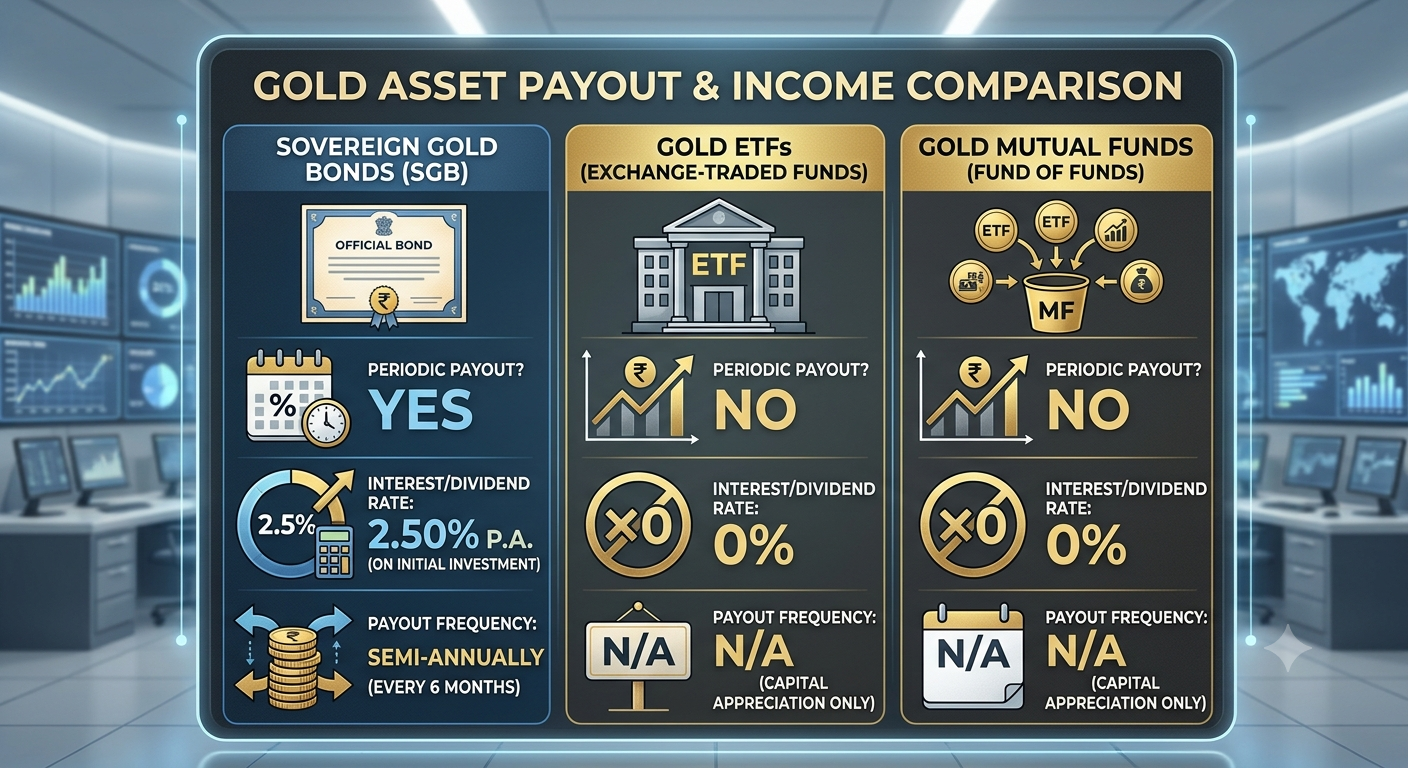
Strategic Summary for Indian Investors
To optimize your gold allocation:
- Separate Utility from Investment: Treat physical jewelry purely as a personal consumption item for cultural ceremonies, not as an investment vehicle.
- Utilize Sovereign & Paper Vehicles for Portfolio Gold: For wealth creation, portfolio hedging, and asset allocation, many people rely on paper gold instruments (such as SGBs via secondary markets). This approach maximizes capital efficiency, eliminates physical drag, and converts passive bullion into a clean financial asset.