
Across rural landscapes and dynamic agricultural terrains, vertical slopes and sharp changes in grade—such as retaining walls, embankment cuts, and structural drop-offs—have traditionally presented operational challenges.
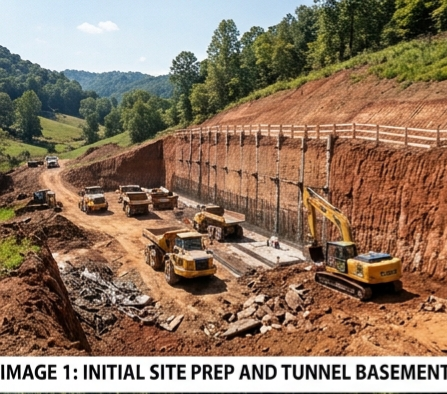
Often viewed as land hazards… prone to heavy erosion, high maintenance, and spatial waste, these steep wall structures can be transformed into productive agricultural assets.
Integrating terraced beds into steep slope retaining structures creates a multifunctional agro-ecosystem.
By converting vertical walls into stepped terrace gardens, farms unlock vital spatial efficiency, structural longevity, microclimate advantages, and superior water management.
1. Maximizing Land Use & Spatial Efficiency
The most immediate operational advantage of wall-integrated terracing is the dramatic increase in usable surface area.
- Footprint Multiplication: On farms with steep elevation drops or cut-out walls, vertical space yields zero agricultural returns. Stepping the gradient into horizontal tiers expands the cultivable surface area well beyond the original two-dimensional footprint.
2. Soil Conservation & Erosion Control
Bare vertical cut-backs and steep banks suffer constant degradation from rain, wind, and gravity. Terraced wall design directly counters these forces:
- Velocity Reduction: By breaking a tall, continuous slope into shorter horizontal benches, terracing eliminates the high-velocity overland water flow that causes topsoil scouring, deep gullies, and mudslides.
- Root Matrix Stabilization: Soil planted on terraces builds an intricate root network that binds the earth behind retaining faces. This living reinforcement drastically reduces soil compaction and lateral erosion along wall boundaries.
3. Structural Longevity & Water Pressure Management
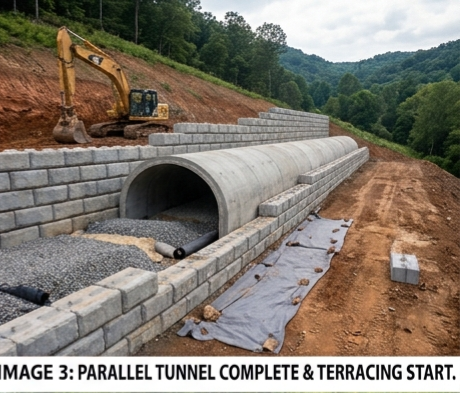
Hydrostatic pressure—trapped, saturated ground water pushing against the rear of a barrier—is the leading cause of retaining wall structural failure.
- Integrated Sub-Drainage: Wall-backed terraces incorporate porous backfill materials (like clean crushed aggregate) paired with continuous lower drainage lines (such as 1-foot primary outlet pipes running parallel to the base).
- Controlled Infiltration: Water percolates downward through planting medium and geotextile filters rather than building up behind a flat, solid surface. This channels heavy rainwater safely off the slope while keeping the soil bed adequately moist.
4. Ergonomics, Access & Operational Safety
Maintaining crops along a continuous steep incline is physically demanding and hazardous for agricultural labor.
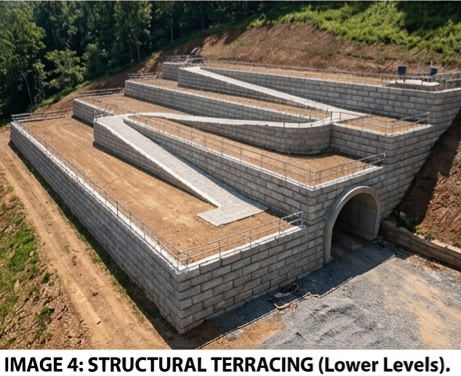
- Workable Footing: Terraced design converts unsafe footing into stable, flat walkways.
- Integrated Access Steps: Pairing terrace beds with switchback staircases or ramps simplifies daily tasks like planting, weeding, trellising, and harvesting.
- Ergonomic Elevation: Tiered beds lift crop canopies to waist or chest height, reducing excessive bending and physical strain for workers.
Conclusion
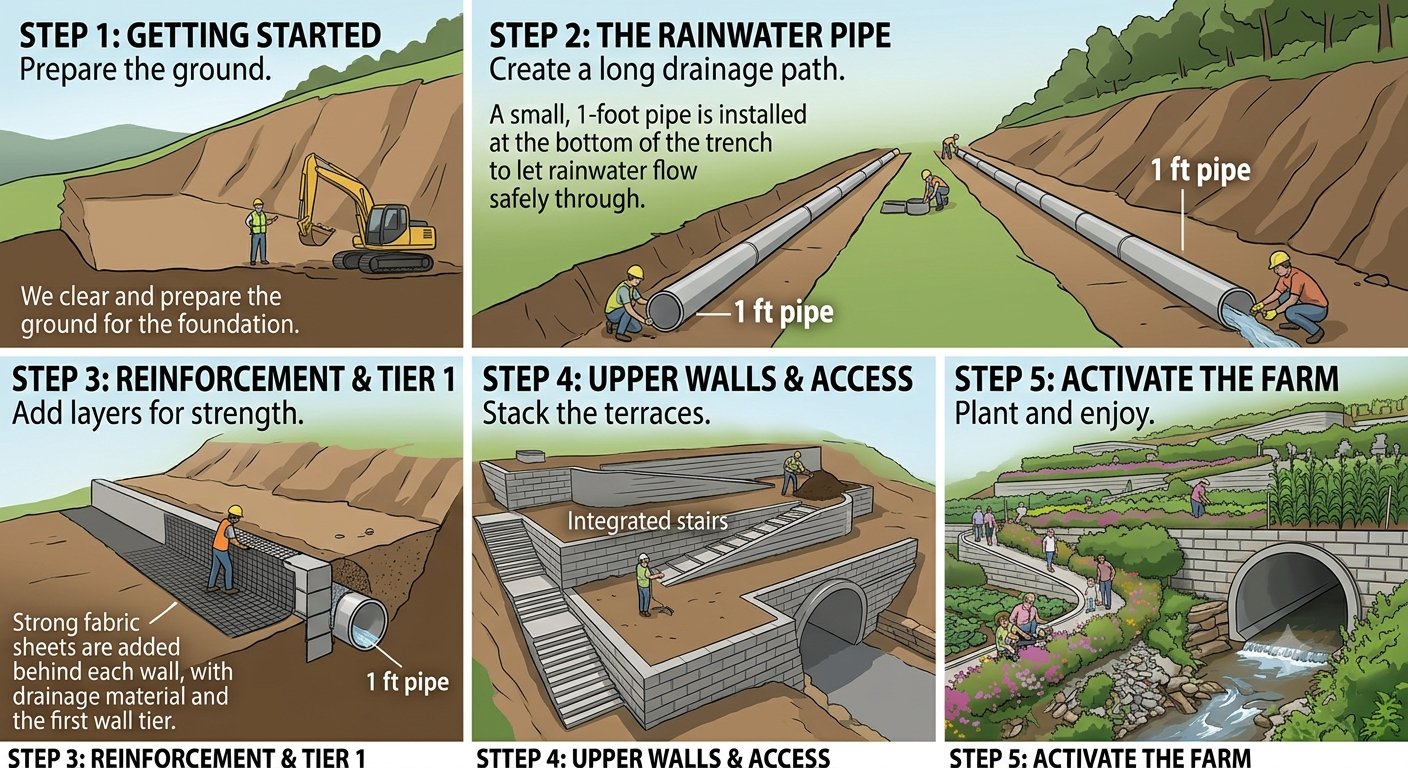
Transforming steep walls and sharp vertical transitions into terraced gardens converts potential structural liabilities into productive farmland.
By integrating stepped retaining walls with proper underlying drainage and structured access, farms enhance water infiltration control, eliminate erosion risks, create favorable microclimates, and expand crop yields per square foot.
Wall-integrated terracing serves as a prime example of sustainable design, combining structural civil engineering with high-efficiency regenerative agriculture.

