
As one of the world’s fastest-growing major economies, India faces a dual challenge: sustaining rapid industrial growth while navigating a complex global energy transition.
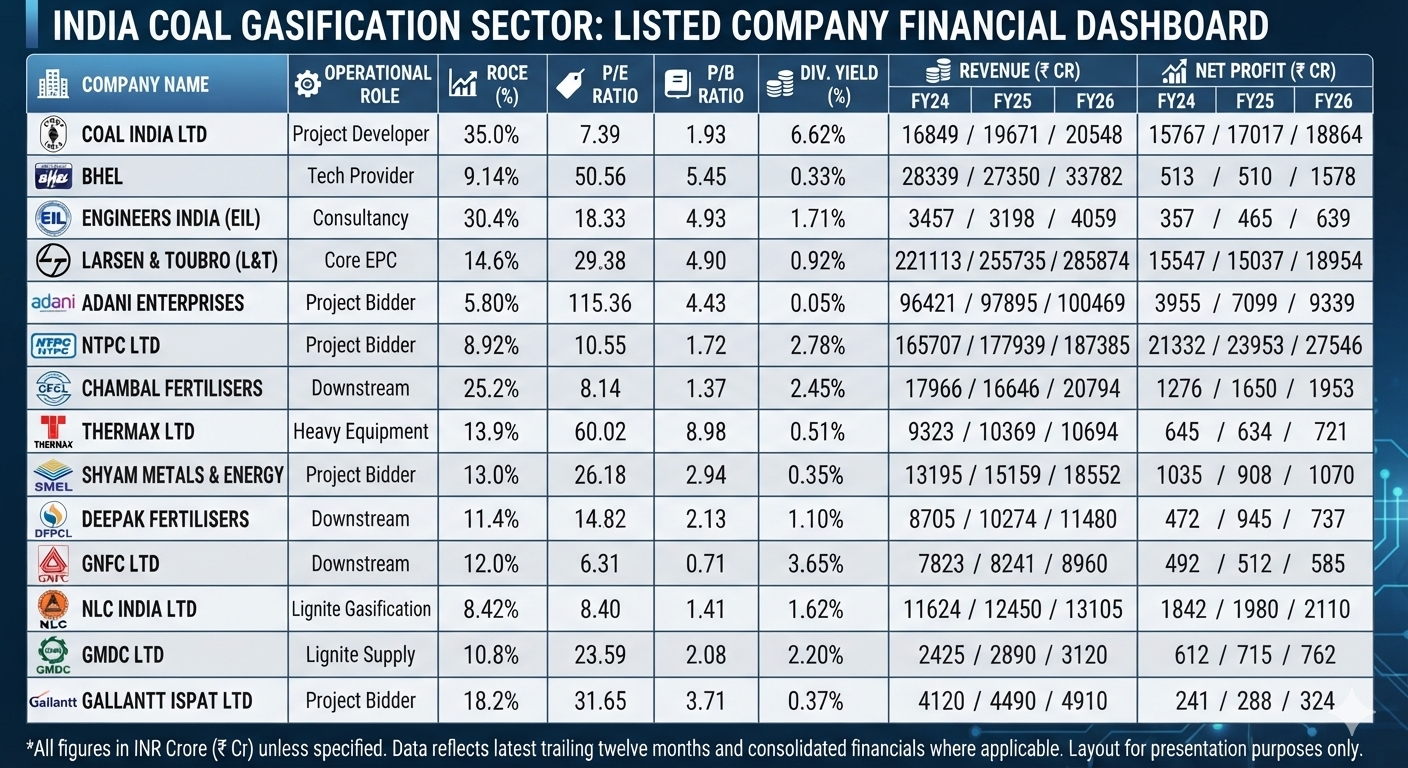
Historically dependent on substantial imports for crude oil, natural gas, and essential chemical feedstocks, the nation is increasingly turning toward its most abundant domestic fossil fuel resource—coal—to build a self-reliant industrial economy.
At the forefront of this strategy is coal gasification, a thermochemical process that converts raw coal into a versatile synthesis gas (syngas) rather than burning it directly.
This technology stands as a cornerstone of India’s long-term strategy to mitigate import reliance, revitalize heavy industry, and pave a realistic path toward carbon mitigation.
Unlike conventional coal combustion, which burns coal in the presence of ample oxygen to generate heat and electricity, coal gasification is a controlled, high-temperature, and high-pressure chemical conversion.
It can be synthesized into alternative fuels like Synthetic Natural Gas (SNG) and methanol, or converted into ammonia—the fundamental precursor for urea and industrial nitrogenous fertilizers.
BENEFITS FOR INDIA
· Import Substitution: India imports vast quantities of crude oil, natural gas, and fertilizers (such as urea). Producing chemicals and synthetic natural gas domestically from coal is projected to generate up to ₹1.5 lakh crore in annual import substitution.
· Feedstock for Heavy Industry: Syngas provides an alternative reducing agent for steel manufacturing (replacing imported coking coal) and acts as a stable feedstock for domestic fertilizer production (e.g., the Talcher Fertilisers project in Odisha).
· Reduced Environmental Footprint: While gasification is still a fossil-fuel-based process, it captures particulate matter, sulfur oxides and nitrogen oxides far more efficiently than conventional thermal power plants. Additionally, the concentrated stream produced during gasification is significantly easier to capture and store via Carbon Capture, Utilization, and Storage (CCUS) technologies.
Policy Framework and Government Incentives
To accelerate commercial deployment, the Ministry of Coal has rolled out a comprehensive incentive mechanism structured around public-private partnerships (PPP) and joint ventures:
| Policy Measure | Description & Key Targets |
| National Target | 100 MTPA of coal and lignite gasified by 2030. |
| Financial Incentive Schemes | • ₹8,500 Crore Scheme (2024): Provided up to 15% capex support across multiple project categories. • ₹37,500 Crore Expanded Scheme (2026): Offers up to 20% financial support for plant and machinery costs to leverage ₹2.5–3.0 lakh crore in total investment. |
| Coal Linkage Support | Long-term coal linkage allocation (up to 30 years) at power-sector floor prices for syngas producers. |
| Fiscal Concessions | 50% rebate on revenue share for commercial coal blocks utilized specifically for gasification. |
| Key Public Outfits | Joint ventures involving Coal India Limited (CIL), GAIL, BHEL, and private entities like Jindal Steel & Power Limited (JSPL). |
Operational and Technological Challenges
Despite its economic and strategic promises, scaling coal gasification in India faces distinct technical and structural hurdles:
- High Ash Content of Indian Coal: Domestic thermal coal typically contains high ash content (35–45%) with low ash-fusion temperatures. Gasifying high-ash coal requires advanced reactor designs (such as fluidised bed gasifiers) to prevent slagging and maintain operational efficiency.
- High Capital Intensity: Gasification plants require substantial upfront capital investments, long gestation periods, and complex Engineering, Procurement, and Construction (EPC) execution.
- Water Intensity: Syngas generation and downstream processing demand significant quantities of water, raising sustainability concerns in water-stressed mining belts.
- Carbon Management: Without active CCUS implementation, coal-to-chemicals pathways emit notable net carbon emissions, requiring careful alignment with India’s broader Net-Zero by 2070 climate targets.
Key Takeaways
India’s Coal Gasification Project represents a pragmatic bridge between immediate energy security needs and long-term industrial transition.
By turning domestic high-ash coal into synthetic gas, chemicals, and clean hydrogen, India aims to reduce import dependence, strengthen domestic manufacturing, and build indigenous technology capabilities.
The success of the mission will depend on executing key anchor projects on schedule, mastering high-ash gasification technologies, and integrating carbon capture mechanisms to ensure a balanced, sustainable energy future.

