
India’s electric vehicle (EV) revolution is unfolding rapidly, but not all companies are playing on the same field.
While Ather Energy is a respected scooter manufacturer comparable to peers like Ampere, River, BattRe, Revolt, and Benling, Ola Electric operates on a far higher strategic plane.
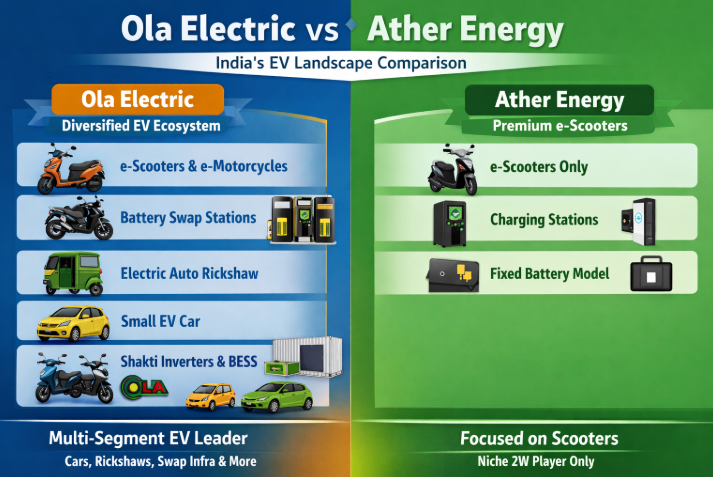
The difference lies in Ola’s diversified roadmap, ecosystem thinking, and ability to integrate its products into its existing mobility business.
Ather Energy: Premium Scooter Maker
Ather Energy has built a reputation for engineering quality and premium scooters such as the 450X, Rizta, and Apex. Its upcoming EL platform aims to bring affordability to the mass market.
However, Ather’s scope remains limited to two‑wheeler manufacturing and charging infrastructure (Ather Grid).
Technically Ather is on the same level as other scooter‑focused companies like Ampere, River, BattRe, Revolt, and Benling. Most of these companies are 1yr, 2yrs or 3yrs behind Ather Energy in sales.
If you see Ather sales 3yrs ago you would see that it was similar to the sales these companies do today. So in effect Ather is a little ahead of them.
Of all the eScootee makers only Ampere is older than Ather. Ok Ather Energy over 13-14 years grew in size, factory and warehouse etc.
The main difference between these vehicles and Ather is the TouchScreen and the technology behind it… which although is great… its not really essential for a scooter owner, as it doesn’t change his life or makes things easy for him… Ather’s tech actually makes Ather scooters more expensive than other eScooters.
Also Ather’s lack of plans for either portable batteries or battery swapping solutions limits adoption in dense urban environments where charging from a socket is impractical. Many building management associations refuse to give permission to install charging point although allowing a charging point for each vehicle owner is mandated by the government.
So if you cannot have a permanent parking spot near your building AND cannot install a plug socket in your parking spot… then you cannot easily charge the vehicle daily.
For eg: If Ather used portable battery instead of its touchscreen technology, pothhole predicition or voice enabled features it would have been a huge benefit to its consumers.
Ola Electric: A Diversified EV Ecosystem
By contrast, Ola Electric is not just a scooter company. Its portfolio spans:
- eScooters: From premium S1 Pro to upcoming Gig and Z Series with swappable batteries.
- eMotorcycles: RoadsterX and other models expanding into the performance segment.
- Battery Swapping Ecosystem (possible): Portable batteries and possible swap stations designed for urban convenience, creating a recurring revenue stream akin to petrol pumps.
- Shakti UPS/Inverters
- MahaShakti – Container‑sized Batteries: Energy storage solutions that diversify Ola beyond vehicles.
- eAutorickshaw and
- Small EV Car: Targeting mass urban mobility markets.
Most importantly in future, just like Ola Electric puts its cells in Ola Electric Vehicles… Ola Electric has the unique advantage of deploying its EVs directly into its sister company Ola Cabs business — bike-taxis, autorickshaws, and cars — giving it an immediate customer base and revenue channel that no other Auto-maker in India possesses. Making Ola Electric a 100% vertically integrated company.
Strategic Differentiation
| Parameters | Ather Energy | Ola Electric |
| Scope | -Scooters and -Motorcycles (maybe in future) | -Scooters -Motorcycles -Cell manufacturing -Autorickshaws -Small cars -Shakti-UPS & Inverters -MahaShakti – Container-Size Battery (All at various stages of deployment). |
| Infrastructure | Charging Grid | – Swap stations – HyperChargers – BESS |
| Integration | Standalone manufacturer | Manufacturer and Integrated with ride‑hailing ecosystem |
| Revenue Streams | -Vehicle sales -Battery charging | -Vehicles sales -Swap infra -Cell Manufacturing -Energy storage -(Mobility services). |
Conclusion
Ola Electric is operating on a completely different level than Ather Energy or any other Indian EV maker. While Ather is a strong scooter brand, it remains confined to the two‑wheeler segment. Ola, on the other hand, is building a multi‑product EV ecosystem with energy storage, swapping infrastructure, and direct integration into its cab business.
Over the next decade, this breadth of vision positions Ola Electric not just as a scooter manufacturer, but as a transformational mobility and energy company. Ather may continue to thrive as a premium scooter player, but Ola’s diversified roadmap gives it the potential to dominate India’s EV future.

